
Trends in Business Automation and Workflow Optimisation 2026 Outlook that Leaders Cannot Ignore
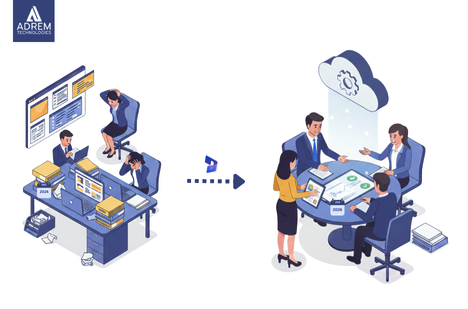
Attention Is Becoming the Real Bottleneck
Attention is a fragile resource in modern organisations.
Every quarter, inboxes grow. Dashboards multiply. Teams stretch themselves thinner than they admit in meetings.
This is why conversations around business automation and workflow optimisation in 2026 have shifted. What once sounded like a boardroom trend has become a survival issue. When approvals take weeks and reports rely on manual patchwork, growth stops feeling exciting and starts feeling exhausting.
I once spoke with an operations manager who joked that his most reliable employee was a spreadsheet that never slept. It was funny until it felt uncomfortably accurate.
This tension is exactly where automation starts to matter, not as technology, but as relief.
Why Automation Conversations Are Changing So Quickly
Not long ago, automation felt like an IT discussion.
Today, it appears everywhere:
-
Leadership meetings
-
Finance reviews
-
Even hallway conversations
Why? Because everyone feels the friction.
Teams are tired of searching across multiple systems. Managers are tired of approvals stalling due to absences. Leaders are tired of numbers that look good but feel chaotic.
Automation is no longer a luxury add-on. It has become the bridge between ambition and execution.
There is also a cultural shift. Younger professionals expect systems to work like modern apps—intuitive and responsive. When enterprise software fails this expectation, frustration grows quietly and then suddenly.
The 2026 Outlook: Automation Becomes More Human
2026 feels different and more hopeful.
Automation is no longer limited to large enterprises with unlimited budgets. It is becoming practical, adaptable, and role-aware. The real shift is not flashy tools, but smarter decisions about what to automate and what to protect as human work.
This balance will define who moves forward and who quietly falls behind.
Organisations working with experienced partners such as Adrem Technologies are already navigating this shift by focusing on realistic workflows rather than idealised systems.
Key Business Automation Trends for 2026
1. AI Shifts from Support Tool to Decision Partner
Artificial intelligence is moving beyond reporting.
In many organisations, AI now:
-
Flags risks
-
Recommends actions
-
Suggests next steps
This does not replace human judgment. Instead, it supports it.
I once watched a finance leader hesitate before trusting an AI-generated forecast, then smile when it matched her own conclusion exactly. That moment hesitation followed by trust is becoming common.
2. Workflow Design Becomes a Leadership Skill
Workflow optimisation is no longer something leaders can delegate and forget.
In 2026, effective leaders understand:
-
How work moves
-
Where it gets stuck
-
Why approvals exist
The strongest leaders ask difficult questions:
-
Who benefits from this step?
-
What breaks if we remove it?
Sometimes, the answers are uncomfortable but revealing.
3. Automation Becomes Personal and Role-Based
Instead of one system for everyone, automation is becoming role specific.
Sales teams automate follow-ups. Finance teams automate approvals. Operations teams automate task visibility.
This personalisation reduces resistance because value becomes immediate. Occasionally, it even introduces humour especially when someone realises their automation handles their least favourite task perfectly.
The Human Side of Workflow Optimisation
Poorly designed processes already feel cold. Automation done badly makes them colder.
But automation done well often has the opposite effect.
I recall an HR team automating onboarding paperwork. The surprising outcome was not speed—but better conversations. With admin handled, people had more time for human connection.
The future of workflow optimisation is emotional as much as operational.
Common Automation Use Cases Gaining Momentum
| Business Area | Automation Focus | Real Impact |
|---|---|---|
| Finance | Invoice processing & approvals | Faster payments, fewer disputes |
| HR | Onboarding & leave management | Better employee experience |
| Operations | Task assignment & tracking | Reduced delays and confusion |
| Customer Support | Ticket routing & responses | Shorter resolution times |
| Sales | CRM updates & follow-ups | More selling, less admin |
These use cases succeed because they remove friction without removing control.
Choosing the Right Automation Partner Matters
Technology alone does not fix workflow problems. Poor automation can lock weak processes into rigid systems.
This is where partners like Adrem Technologies stand out. Their approach prioritises understanding how a business actually operates before introducing automation. This reduces resistance and increases long-term adoption.
Experience shows that organisations working with partners who listen first achieve more sustainable results.
Challenges That Will Not Disappear
Automation is not magic.
Businesses in 2026 will still face:
-
Resistance to change
-
Concerns around role relevance
-
Leadership hesitation due to past failures
There is also the risk of over-automation. Some processes exist for valid reasons, even when they feel slow. Knowing the difference is a critical skill.
And then there is data quality. Automation only works as well as the data behind it a reality many organisations discover too late.
Final Thoughts: Automation as a Maturity Test
Looking ahead, business automation in 2026 feels less like a technology race and more like a maturity test.
The organisations that succeed will not be those with the most tools, but those with clarity about how work should feel:
-
Less chasing
-
Less waiting
-
More thinking
Companies such as Adrem Technologies play an important role in this shift by designing automation around real workflows, not theoretical diagrams.
The future of automation is human at its core. When done thoughtfully, it gives people something invaluable back time to think, to connect, and to do work that truly matters.
Tags
Author

Sara Adam