
The Rise of Autonomous ERP Systems Powered by AI Agents
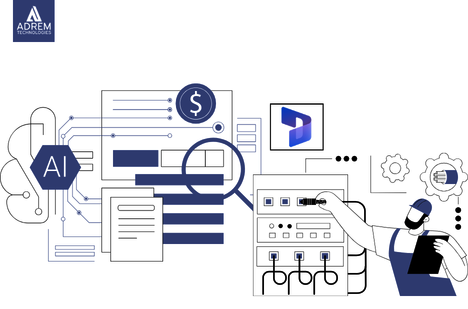
Why Enterprise Software Is Starting to Think Differently
Businesses no longer expect ERP systems to simply store information.
That expectation changed years ago.
Today, organizations want enterprise software that helps them interpret data, identify risks, improve forecasting, and support faster decision-making. Storing information is still important, but it is no longer enough.
This is exactly why autonomous ERP systems powered by AI agents are becoming a major topic in enterprise technology discussions.
Traditional ERP systems helped businesses answer historical questions:
-
What sold last month?
-
Which invoices remain unpaid?
-
How much stock is available?
-
What is our financial position?
These questions still matter.
However, modern businesses increasingly ask different questions:
-
Which suppliers may create future risks?
-
What demand changes are developing?
-
Which operational delays could disrupt performance?
-
Where are process bottlenecks forming?
Answering these questions requires more than reporting.
It requires intelligent interpretation.
That is where autonomous ERP systems powered by AI agents create value.
Companies implementing enterprise platforms such as Microsoft Dynamics 365 are increasingly exploring artificial intelligence to improve visibility, automate workflows, and strengthen business forecasting. Implementation quality remains equally important, which is why organizations often work with partners such as Adrem Technologies to align ERP systems with operational goals rather than standard deployment models.
In this blog, we explore:
-
What autonomous ERP systems actually are
-
How AI agents improve enterprise operations
-
Which technologies power intelligent ERP
-
Industry use cases for AI-driven ERP
-
Challenges businesses should consider
-
Practical steps before ERP transformation
What Are Autonomous ERP Systems Powered by AI Agents?
The phrase sounds technical.
However, the concept is simpler than it appears.
An autonomous ERP system combines enterprise resource planning software with artificial intelligence that can:
-
Detect patterns
-
Analyze operational data
-
Predict likely outcomes
-
Recommend actions
-
Automate repetitive workflows
-
Improve decision support
Traditional ERP systems focus on transaction recording.
Autonomous ERP systems focus on intelligent action.
For example:
Traditional ERP response: Stock levels dropped.
Autonomous ERP response: Stock levels dropped. Demand trends suggest further shortages. Procurement adjustments may be necessary. Alternative suppliers have been identified.
Same information.
Very different business outcome.
Because timing matters, this distinction becomes increasingly valuable.
Traditional ERP vs Autonomous ERP
| Capability | Traditional ERP | Autonomous ERP |
|---|---|---|
| Data Management | Yes | Yes |
| Reporting | Historical | Real-time |
| Forecasting | Limited | Predictive |
| Automation | Rule-based | AI-supported |
| Decision Support | Basic | Advanced |
| Learning Capability | No | Continuous |
| Workflow Response | Manual | Semi-autonomous |
Why Enterprise Expectations Have Changed
For years, ERP systems successfully centralized enterprise data.
That solved one major problem.
Now businesses face a different challenge.
Too much data exists, but useful insight often arrives too late.
Operational delays commonly happen because:
-
Reports remain pending
-
Departments work separately
-
Inventory updates lag behind reality
-
Approvals slow decision-making
-
Forecasts rely on outdated assumptions
As businesses become faster and more competitive, slow decisions create real financial consequences.
Therefore, companies increasingly want systems that help them respond earlier rather than simply document events afterward.
How AI Agents Improve ERP Operations
Standard automation follows predefined instructions.
AI agents behave differently.
They evaluate context before responding.
That distinction matters.
For example:
A shipment delay occurs.
Traditional automation: Send a notification.
AI-powered ERP response:
-
Analyze affected customer orders
-
Estimate delivery impact
-
Identify alternative inventory
-
Alert procurement teams
-
Update operational forecasts
-
Notify relevant departments automatically
This creates a far more proactive workflow.
As a result, businesses reduce operational disruption.
Technologies Behind Autonomous ERP Systems
Several technologies work together inside intelligent ERP environments.
Machine Learning
Machine learning identifies patterns based on historical data.
Common applications include:
-
Demand forecasting
-
Inventory optimization
-
Financial analysis
-
Resource planning
-
Supplier performance monitoring
Because machine learning improves over time, forecasting becomes more accurate.
Predictive Analytics
Predictive analytics estimates likely future outcomes.
Examples include:
-
Revenue forecasting
-
Inventory demand prediction
-
Supply chain risk detection
-
Capacity planning
-
Procurement timing recommendations
Therefore, businesses plan more effectively.
Natural Language Processing
ERP systems are becoming easier to interact with.
Users can increasingly ask:
“Which inventory risks may affect us next month?”
The system responds with actionable insights.
This improves accessibility significantly.
Robotic Process Automation (RPA)
RPA handles repetitive operational tasks such as:
-
Invoice processing
-
Data entry
-
Documentation workflows
-
Purchase approvals
-
Routine reconciliation
Consequently, employees spend less time on repetitive administration.
Generative AI
Generative AI helps create:
-
Business summaries
-
Automated reports
-
Operational recommendations
-
Internal documentation
-
Decision support content
This accelerates communication and reporting.
AI Technologies Supporting Intelligent ERP
| Technology | Business Function | Operational Benefit |
|---|---|---|
| Machine Learning | Forecasting | Better planning |
| Predictive Analytics | Risk analysis | Faster decision-making |
| NLP | User interaction | Easier access to insights |
| RPA | Workflow automation | Reduced manual effort |
| Generative AI | Reporting support | Faster communication |
Industries Exploring Autonomous ERP Adoption
Autonomous ERP adoption is expanding across industries.
Manufacturing
Manufacturers use intelligent ERP for:
-
Predictive maintenance
-
Inventory planning
-
Production scheduling
-
Supplier coordination
Because downtime is expensive, predictive intelligence becomes especially valuable.
Retail
Retail businesses benefit from:
-
Demand forecasting
-
Inventory optimization
-
Pricing analysis
-
Customer trend visibility
Since customer expectations move quickly, retail operations require agility.
Healthcare
Healthcare organizations increasingly use ERP intelligence for:
-
Procurement planning
-
Scheduling
-
Resource allocation
-
Compliance support
Accuracy and timing both matter significantly.
Logistics
Logistics teams apply intelligent ERP for:
-
Shipment tracking
-
Warehouse coordination
-
Route optimization
-
Supply chain visibility
This improves service reliability.
Financial Services
Financial organizations use intelligent ERP for:
-
Risk monitoring
-
Fraud detection
-
Compliance workflows
-
Financial forecasting
Therefore, governance improves alongside efficiency.
Why Microsoft Dynamics 365 Matters in AI ERP Conversations
Microsoft Dynamics 365 continues gaining attention because it combines:
-
ERP functionality
-
Analytics
-
Automation
-
Cloud scalability
-
AI-supported workflows
-
Integration flexibility
Businesses increasingly evaluate Dynamics 365 not only for traditional ERP capabilities, but also for intelligent business automation potential.
However, software alone does not determine outcomes.
Implementation quality remains critical.
Adrem Technologies supports organizations with ERP deployment, integration, customization, and long-term optimization aligned with operational business goals.
Operational Outcomes Before and After Intelligent ERP
 Adrem Technologies – Signs Your Business May Need More Intelligent ERP Capabilities
Small operational improvements often create major long-term impact.
Business Outcomes Before vs After Intelligent ERP
| Operational Area | Before Intelligent ERP | After Intelligent ERP |
|---|---|---|
| Inventory Planning | Reactive | Predictive |
| Reporting | Delayed | Real-time |
| Procurement | Manual | Automated |
| Forecasting | Limited | Data-driven |
| Customer Service | Reactive | Proactive |
| Operational Visibility | Partial | Improved |
Common Challenges During ERP Transformation
ERP modernization offers strong benefits.
However, transformation still requires planning.
Legacy Infrastructure
Older systems may create integration challenges.
As a result, modernization projects can become more complex.
Poor Data Quality
AI depends on reliable data.
Duplicate records, inconsistent formats, and incomplete information reduce effectiveness.
Therefore, data governance becomes essential.
Employee Resistance
Automation often creates understandable questions:
-
Will jobs disappear?
-
Will responsibilities change?
-
Will teams trust AI recommendations?
Most businesses find roles evolve rather than disappear.
Implementation Complexity
ERP projects affect:
-
Workflows
-
Reporting
-
Department collaboration
-
Process governance
-
Training requirements
Without careful planning, disruption increases.
Why Companies in the UAE Are Investing in Intelligent ERP
Many companies in the UAE continue accelerating digital transformation.
Several factors drive this:
-
Regional competition
-
Operational growth
-
Customer expectations
-
Supply chain complexity
-
Compliance demands
-
Multi-location operations
Because business environments move faster, static ERP systems often feel insufficient.
Practical Steps Before Adopting Autonomous ERP
Businesses should prepare carefully before ERP transformation.
Assess Current Processes
Identify repetitive manual activities.
These often create the strongest automation opportunities.
Improve Data Governance
Reliable AI depends on reliable information.
Therefore, data cleanup should happen early.
Define Clear Objectives
Technology should support measurable business outcomes.
Examples include:
-
Faster forecasting
-
Better visibility
-
Reduced manual effort
-
Improved customer response speed
Choose Experienced Implementation Support
ERP transformation depends heavily on execution quality.
Technology alone is not enough.
Start with Pilot Projects
Smaller deployments reduce operational risk.
This improves learning and adoption.
Will ERP Systems Become Fully Autonomous?
Probably not entirely.
Strategic leadership decisions still require human judgment.
Examples include:
-
Major acquisitions
-
Organizational restructuring
-
Capital investment strategy
-
Business partnerships
AI improves operational decision support.
It does not replace leadership perspective.
Signs Your Business May Need Smarter ERP Capabilities
Ask these questions:
-
Does reporting require excessive manual work?
-
Are approvals consistently delayed?
-
Do inventory problems repeat frequently?
-
Are forecasts unreliable?
-
Do teams depend heavily on spreadsheets?
If multiple answers are yes, intelligent ERP may provide significant value.
Conclusion
The rise of autonomous ERP systems powered by AI agents reflects a broader enterprise shift.
Businesses no longer want systems that simply document activity.
They increasingly want systems that:
-
Interpret data
-
Predict issues
-
Recommend actions
-
Improve responsiveness
-
Strengthen forecasting
-
Reduce operational friction
This transformation does not remove people from decision-making.
Instead, it helps teams focus where human judgment adds the most value.
Organizations exploring ERP modernization increasingly recognize that implementation, integration, and long-term planning remain just as important as technology selection.
Companies such as Adrem Technologies continue helping businesses align intelligent ERP systems with practical operational objectives.
ERP systems once helped businesses organize information.
Now they are beginning to help businesses understand it faster.
Frequently Asked Questions
What are autonomous ERP systems powered by AI agents? These systems combine ERP software with artificial intelligence to support automation, forecasting, predictive insights, and operational decision support.
How do AI agents improve ERP systems? AI agents analyze business conditions, identify patterns, recommend actions, and automate responses beyond traditional rule-based workflows.
Is Microsoft Dynamics 365 suitable for intelligent ERP strategies? Yes. Microsoft Dynamics 365 supports automation, analytics, AI integration, and enterprise scalability.
Can smaller businesses adopt intelligent ERP systems? Yes. Cloud ERP platforms increasingly make AI-powered capabilities accessible to businesses of different sizes.
Why does ERP implementation expertise matter? Because implementation quality directly affects adoption, integration performance, operational workflows, and long-term business results.
Frequently asked questions
What are autonomous ERP systems powered by AI agents?
These systems combine ERP software with artificial intelligence to support automation, forecasting, predictive insights, and operational decision support.
How do AI agents improve ERP systems?
AI agents analyze business conditions, identify patterns, recommend actions, and automate responses beyond traditional rule-based workflows.
Is Microsoft Dynamics 365 suitable for intelligent ERP strategies?
Yes. Microsoft Dynamics 365 supports automation, analytics, AI integration, and enterprise scalability.
Can smaller businesses adopt intelligent ERP systems?
Yes. Cloud ERP platforms increasingly make AI-powered capabilities accessible to businesses of different sizes.
Why does ERP implementation expertise matter?
Because implementation quality directly affects adoption, integration performance, operational workflows, and long-term business results.
Tags
Author

Sara Adam