
How AI Sales Agents Are Transforming Dynamics 365 Sales in 2026
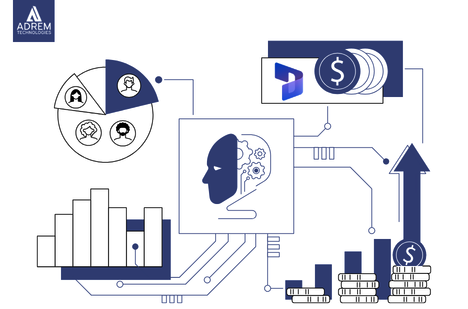
Sales in 2026 looks very different from just a few years ago. Customers now expect faster replies, personalized engagement, and smoother buying experiences. Meanwhile, businesses using outdated CRM processes often struggle to keep pace.
That is exactly why AI sales agents in Dynamics 365 Sales have become a major topic for modern businesses.
Artificial intelligence inside Microsoft Dynamics 365 Sales now does far more than simple automation. It helps sales teams identify opportunities faster, improve customer engagement, automate repetitive tasks, and forecast revenue with greater accuracy.
Companies such as Adrem Technologies continue helping organizations modernize Microsoft Dynamics 365 through CRM optimization, AI integration, and intelligent sales transformation strategies.
In this blog, we will explore:
-
Why AI sales agents matter in 2026
-
How Dynamics 365 Sales uses AI
-
The benefits of Microsoft Copilot
-
AI-driven customer experience improvements
-
Common implementation challenges
-
Why AI forecasting is reshaping sales operations
Why AI Sales Agents Matter More in 2026
Modern customers are far more informed than before.
Before speaking with sales teams, buyers often:
-
Compare multiple vendors
-
Research competitors
-
Review pricing structures
-
Read product reviews
-
Analyze alternatives independently
As a result, sales teams face greater pressure.
Slow responses and generic communication now create immediate disadvantages.
This is where AI sales agents provide real business value.
AI helps sales teams:
-
Identify high-value opportunities faster
-
Analyze customer behavior more effectively
-
Reduce repetitive CRM administration
-
Improve follow-up timing
-
Personalize customer communication
-
Strengthen revenue forecasting
Consequently, sales teams spend more time selling and less time managing administrative work.
How AI Sales Agents Improve Dynamics 365 Sales Performance
| AI Capability | Dynamics 365 Sales Function | Business Benefit |
|---|---|---|
| Predictive analytics | Opportunity forecasting | Better revenue planning |
| AI lead scoring | Priority-based lead management | Higher conversion rates |
| Automated follow-ups | Personalized engagement | Faster response times |
| Conversation intelligence | Real-time sales insights | Better customer interactions |
| AI recommendations | Next-best-action guidance | Smarter decision-making |
How Dynamics 365 Sales Became an Intelligent CRM Platform
Microsoft has significantly evolved Dynamics 365 Sales into an AI-powered CRM platform.
Instead of functioning as a static customer database, the platform now behaves more like an intelligent sales assistant.
Predictive Lead Scoring
Sales teams often waste time pursuing low-probability leads.
AI changes that.
Dynamics 365 Sales evaluates:
-
Historical customer interactions
-
Website engagement
-
Email activity
-
Industry trends
-
Buying intent signals
-
Engagement patterns
As a result, teams focus on leads with stronger conversion potential.
Conversation Intelligence
Sales conversations contain valuable insight.
However, manually capturing those details is unreliable.
Dynamics 365 Sales now analyzes:
-
Customer objections
-
Competitor mentions
-
Sentiment changes
-
Buying signals
-
Missed opportunities
This gives sales managers stronger visibility into customer interactions.
Relationship Health Monitoring
Customer relationships can weaken gradually.
AI helps detect warning signs early.
Signals may include:
-
Reduced engagement
-
Delayed replies
-
Negative sentiment
-
Missed meetings
-
Lower communication frequency
Therefore, sales teams can intervene before accounts become inactive.
Traditional CRM vs AI-Powered Dynamics 365 Sales
| Traditional CRM Workflow | AI-Powered Dynamics 365 Workflow |
|---|---|
| Manual data entry | Automated CRM updates |
| Generic follow-ups | Personalized communication |
| Reactive selling | Predictive opportunity management |
| Spreadsheet forecasting | AI revenue forecasting |
| Delayed responses | Real-time interaction insights |
How AI Sales Agents Improve Customer Experience
Customer experience has become one of the strongest competitive differentiators.
AI improves customer engagement in several practical ways.
 Adrem Technologies – How AI Sales Agents Improve Customer Experience
Faster Communication
AI-powered tools can:
-
Suggest responses instantly
-
Draft contextual emails
-
Surface relevant customer information
-
Route inquiries intelligently
Because of this, response times improve significantly.
More Personalized Interactions
Customers expect relevance.
AI helps businesses personalize engagement based on:
-
Purchase history
-
Industry-specific challenges
-
Previous interactions
-
Product interest
-
Engagement activity
Consequently, communication feels more meaningful.
Smarter Opportunity Detection
AI can identify subtle buying signals such as:
-
Repeated pricing page visits
-
Increased website activity
-
Product comparison behavior
-
Higher email engagement
-
Return visits from decision-makers
As a result, sales teams can engage opportunities earlier.
The Role of Microsoft Copilot in Dynamics 365 Sales
Microsoft Copilot has become one of the most valuable AI tools inside Dynamics 365 Sales.
Initially, many sales professionals viewed AI assistants with skepticism.
However, practical benefits changed that quickly.
Meeting Summaries
Copilot automatically:
-
Captures discussion highlights
-
Summarizes key decisions
-
Reduces note-taking effort
-
Improves follow-up speed
This saves considerable administrative time.
Contextual Email Drafting
Copilot helps sales professionals create:
-
Personalized follow-up emails
-
Customer-specific proposals
-
Re-engagement messages
-
Faster communication responses
Therefore, productivity improves without sacrificing personalization.
Next-Best-Action Recommendations
Copilot also suggests:
-
Follow-up opportunities
-
Proposal scheduling
-
Upsell recommendations
-
Re-engagement actions
-
Relationship recovery strategies
This reduces decision fatigue during busy sales cycles.
Common Challenges When Implementing AI Sales Agents
AI implementation requires planning.
Without preparation, businesses often face avoidable problems.
Poor CRM Data Quality
AI depends heavily on clean data.
Common data problems include:
-
Duplicate records
-
Missing customer information
-
Outdated contact details
-
Inconsistent reporting structures
Poor data creates weak AI recommendations.
Employee Resistance
Some sales professionals worry AI will replace human roles.
However, successful businesses position AI as a productivity tool rather than a replacement.
This helps improve adoption.
Over-Automation
Too much automation can make customer interactions feel robotic.
Therefore, businesses should balance automation with authentic communication.
AI Sales Forecasting Is Changing Revenue Planning
Sales forecasting historically involved assumptions, spreadsheets, and optimism.
AI changes that dramatically.
Benefits of AI forecasting include:
-
Better budgeting accuracy
-
Improved sales planning
-
Faster strategic adjustments
-
Reduced financial uncertainty
-
Smarter staffing decisions
Finance teams particularly value this increased precision.
Manual Forecasting vs AI Forecasting in Dynamics 365
| Forecasting Method | Accuracy | Speed | Business Reliability |
|---|---|---|---|
| Manual forecasting | Medium | Slow | Limited |
| Spreadsheet forecasting | Inconsistent | Moderate | Moderate |
| AI forecasting in Dynamics 365 | High | Fast | Strong |
Why Businesses Are Investing in AI Sales Transformation
Businesses are increasingly adopting AI-powered CRM strategies because sales complexity continues to grow.
AI helps organizations:
-
Improve pipeline visibility
-
Strengthen customer engagement
-
Increase conversion efficiency
-
Accelerate response times
-
Support smarter decision-making
At the same time, competitors are moving quickly.
Therefore, AI adoption is becoming more strategic rather than optional.
How Adrem Technologies Supports Dynamics 365 AI Modernization
Successful AI CRM transformation requires technical expertise and business process understanding.
Organizations often need help with:
-
Dynamics 365 optimization
-
CRM workflow redesign
-
AI implementation planning
-
Sales process automation
-
Data cleanup and governance
Adrem Technologies continues helping businesses modernize Dynamics 365 Sales environments through practical AI transformation strategies.
Conclusion
The conversation around how AI sales agents are transforming Dynamics 365 Sales in 2026 is no longer theoretical.
Artificial intelligence is actively reshaping:
-
Sales forecasting
-
Customer engagement
-
Lead management
-
CRM productivity
-
Revenue planning
However, technology alone does not create transformation.
Businesses still need:
-
Clean CRM data
-
Strong implementation planning
-
Sales team training
-
Balanced automation strategies
-
Customer-focused execution
The most successful organizations will combine AI efficiency with human relationship-building.
Companies such as Adrem Technologies continue supporting this transition by helping businesses modernize CRM environments without losing the human side of customer relationships.
In the end, AI is not replacing great sales professionals.
It is helping them work smarter.
Frequently Asked Questions
What are AI sales agents in Dynamics 365 Sales? AI sales agents are intelligent CRM tools that help automate workflows, analyze customer behavior, prioritize leads, and improve sales decision-making.
How does AI improve Dynamics 365 Sales? AI improves Dynamics 365 Sales through predictive lead scoring, conversation intelligence, forecasting automation, customer insights, and workflow recommendations.
What does Microsoft Copilot do in Dynamics 365 Sales? Microsoft Copilot helps users summarize meetings, draft contextual emails, suggest next actions, and improve CRM productivity.
Is AI forecasting more accurate than traditional forecasting? Yes. AI forecasting uses real-time data and predictive analysis, making forecasts significantly more accurate than manual spreadsheets.
Can small businesses use AI in Dynamics 365 Sales? Yes. Businesses of all sizes can benefit from AI-powered CRM improvements, especially in sales productivity and customer engagement.
Frequently asked questions
What are AI sales agents in Dynamics 365 Sales?
AI sales agents are intelligent CRM tools that help automate workflows, analyze customer behavior, prioritize leads, and improve sales decision-making.
How does AI improve Dynamics 365 Sales?
AI improves Dynamics 365 Sales through predictive lead scoring, conversation intelligence, forecasting automation, customer insights, and workflow recommendations.
What does Microsoft Copilot do in Dynamics 365 Sales?
Microsoft Copilot helps users summarize meetings, draft contextual emails, suggest next actions, and improve CRM productivity.
Is AI forecasting more accurate than traditional forecasting?
Yes. AI forecasting uses real-time data and predictive analysis, making forecasts significantly more accurate than manual spreadsheets.
Can small businesses use AI in Dynamics 365 Sales?
Yes. Businesses of all sizes can benefit from AI-powered CRM improvements, especially in sales productivity and customer engagement.
Tags
Author

Sara Adam