
Shift Left Testing: Why QA Should Start at the Requirement Stage
Introduction: When Bugs Show Up Too Late
You have probably seen this happen. A product goes live, everything seems fine, and then issues begin to surface. Bugs appear unexpectedly, customers raise concerns, and teams rush to fix problems under pressure.
At that point, frustration builds quickly.
However, the real issue is not always the number of tests performed. Instead, it is when testing begins. When quality assurance starts after development, teams are already reacting rather than preventing.
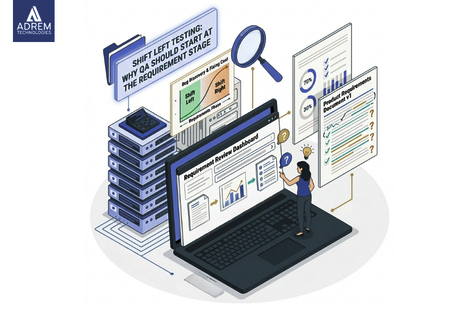
That is exactly why Shift Left Testing: Why QA Should Start at the Requirement Stage has become such an important conversation.
Rather than fixing problems after they appear, this approach focuses on preventing them from happening in the first place.
Traditional Testing vs Shift Left Testing
| Aspect | Traditional Testing | Shift Left Testing |
|---|---|---|
| QA Involvement | After development | From requirement stage |
| Bug Detection | Late | Early |
| Cost of Fixing Issues | High | Low |
| Collaboration | Limited | Continuous |
| Quality Approach | Reactive | Proactive |
What Shift Left Testing Actually Means
At its core, Shift Left Testing is simple.
It means moving testing activities earlier in the development lifecycle.
Instead of waiting for developers to finish coding, QA teams participate during:
-
Requirement discussions
-
Design planning
-
Early product brainstorming
As a result, potential issues are identified before they become actual defects.
More importantly, QA professionals begin asking critical questions early:
-
What happens if inputs are invalid?
-
How does the system behave under stress?
-
Are edge cases clearly defined?
These questions shape better products from the beginning.
Why Starting QA at the Requirement Stage Changes Everything
Requirements are rarely perfect. In fact, they often contain:
-
Gaps
-
Ambiguities
-
Conflicting interpretations
Without early validation, these issues turn into defects later.
However, when QA joins requirement discussions:
-
Missing scenarios are identified early
-
Assumptions are challenged
-
Acceptance criteria become clearer
Consequently, teams avoid confusion before development even begins.
The Hidden Cost of Late Testing
Late testing does not just increase bugs it creates ripple effects across the entire project.
For example:
-
Fixing issues becomes more complex
-
Deadlines start slipping
-
Team stress increases
Imagine discovering a critical logic flaw after multiple modules are already built. Fixing it may require reworking several components, not just one.
On the other hand, identifying the same issue during requirement discussions would take minutes.
Therefore, timing matters more than effort.
How QA Adds Value During Requirement Analysis
When QA participates early, their role becomes far more strategic.
They help:
-
Identify missing scenarios
-
Clarify vague requirements
-
Define testable acceptance criteria
-
Represent real user perspectives
In many cases, QA teams also challenge assumptions that others may overlook.
This proactive involvement leads to stronger product foundations.
Impact of Early QA Involvement
| Factor | Without Shift Left | With Shift Left |
|---|---|---|
| Requirement Clarity | Moderate | High |
| Bug Count | High | Low |
| Rework Effort | Frequent | Minimal |
| Team Stress | High | Manageable |
Common Challenges (And How to Handle Them)
Although Shift Left Testing offers clear benefits, adoption is not always immediate.
Some common concerns include:
-
Developers feeling interrupted
-
Product managers worrying about delays
-
Teams resisting process changes
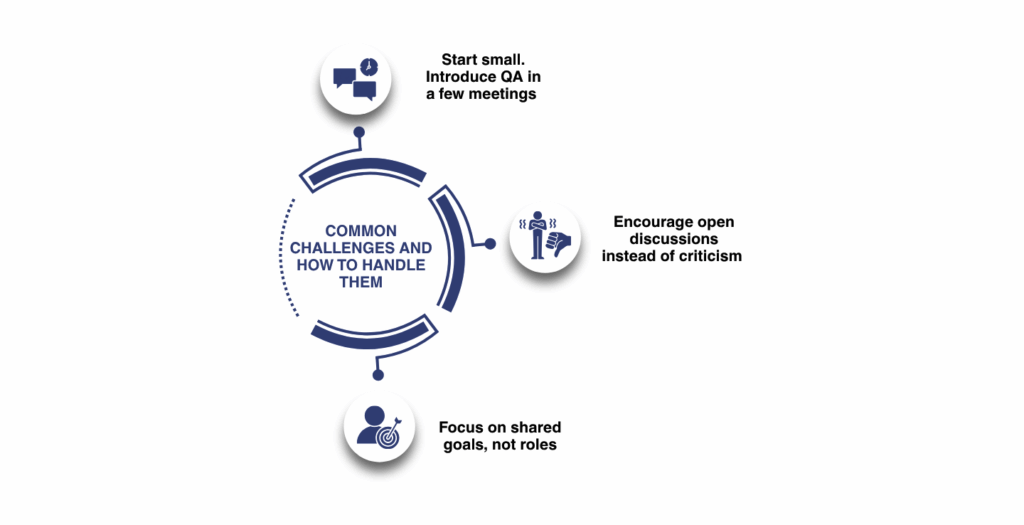
However, these challenges can be addressed with a gradual approach:
-
Start with QA involvement in key meetings
-
Encourage collaboration instead of criticism
-
Focus on shared goals rather than roles
Over time, teams begin to see the value naturally.
Tools and Practices That Support Shift Left
While mindset plays the biggest role, certain tools can help:
-
Requirement management tools for clarity
-
Test case platforms for early planning
-
Continuous integration systems for quick validation
Still, tools alone are not enough.
The real shift happens when teams start thinking of quality as a shared responsibility.
Measuring the Success of Shift Left Testing
To understand the impact, teams should track key metrics:
-
Defect leakage rate
-
Time required to fix issues
-
Release cycle speed
-
Customer feedback trends
These indicators provide a clear view of improvement.
Metrics Before and After Shift Left
| Metric | Before Shift Left | After Shift Left |
|---|---|---|
| Defect Leakage | High | Low |
| Bug Fix Time | Long | Short |
| Release Delays | Frequent | Rare |
| Customer Complaints | Higher | Lower |
The Role of Early Collaboration
One interesting outcome of Shift Left Testing is improved collaboration.
When QA, developers, and product teams work together early:
-
Communication becomes clearer
-
Expectations align faster
-
Decisions happen with confidence
Instead of working in silos, teams operate as a unified group.
Where Adrem Technologies Fits In
Organizations like Adrem Technologies emphasize early QA involvement as part of structured development practices.
Their approach focuses on:
-
Integrating QA into early project phases
-
Encouraging cross-team collaboration
-
Building quality into processes rather than adding it later
This method reflects a broader shift toward prevention rather than correction.
Final Thoughts: Build Quality Early, Not Later
If there is one takeaway, it is this:
Quality should not be added at the end it should be built from the beginning.
Shift Left Testing supports this idea by:
-
Reducing defects early
-
Improving team collaboration
-
Delivering more reliable products
As development cycles become faster and more complex, this approach is no longer optional it is essential.
The next time your team discusses requirements, consider a simple question:
Should QA be part of this conversation?
The answer is always yes.
Frequently Asked Questions
What is Shift Left Testing? It is an approach where testing starts early in the development lifecycle, especially during requirement and design stages.
Why is early QA involvement important? Because it helps identify issues before development begins, reducing defects and rework.
Does Shift Left slow down development? Initially, it may seem slower. However, it speeds up delivery by reducing later-stage fixes.
What are the main benefits? Lower defect rates, faster releases, better collaboration, and improved product quality.
Can small teams implement Shift Left Testing? Yes. Even small teams benefit significantly from early QA involvement and structured validation.
Frequently asked questions
What is Shift Left Testing?
It is an approach where testing starts early in the development lifecycle, especially during requirement and design stages.
Why is early QA involvement important?
Because it helps identify issues before development begins, reducing defects and rework.
Does Shift Left slow down development?
Initially, it may seem slower. However, it speeds up delivery by reducing later-stage fixes.
What are the main benefits?
Lower defect rates, faster releases, better collaboration, and improved product quality.
Can small teams implement Shift Left Testing?
Yes. Even small teams benefit significantly from early QA involvement and structured validation.
Tags
Author

Sara Adam