
Microsoft Dynamics 365 for Real Estate: Game-Changing Features for UAE Developers
Real Estate in the UAE Moves Fast Your Systems Should Too
The UAE property market does not slow down. Projects launch quickly. Investors expect transparency. Regulators require precision. Meanwhile, buyers demand instant responses and structured payment clarity.
In this environment, even a small reporting delay can ripple across an entire development.
That is why conversations around Microsoft Dynamics 365 for real estate are becoming more practical and less theoretical. Developers in Dubai, Abu Dhabi, and Sharjah are no longer asking whether digital transformation is necessary. Instead, they are asking how to implement it correctly.
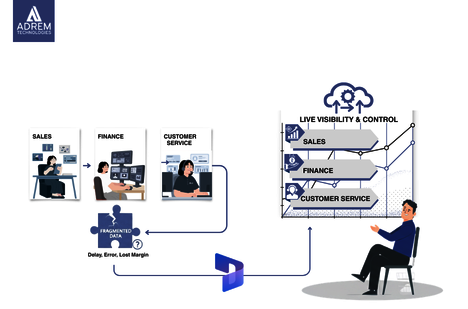
Many firms still operate with disconnected tools. Sales teams rely on one platform. Finance manages another. Customer service depends on emails and spreadsheets. Initially, it works. However, once projects scale into hundreds or thousands of units, operational gaps begin to show.
This is where integration changes everything.
Companies such as Adrem Technologies have been helping UAE developers unify operations through structured Microsoft Dynamics 365 implementations. Their focus is not just system deployment but aligning technology with real estate workflows across the Emirates.
Let us break this down in a practical way.
Traditional Systems vs. Microsoft Dynamics 365
| Function | Disconnected Systems | Microsoft Dynamics 365 |
|---|---|---|
| Lead Tracking | Manual entry | Automatic capture from portals |
| Unit Availability | Periodic updates | Real-time visibility |
| Escrow Reporting | Separate accounting | Integrated financial tracking |
| Broker Commissions | Spreadsheet-based | Automated commission logic |
| Customer Records | Scattered files | Centralized unified profile |
The operational difference may look subtle on paper. In practice, it transforms control and efficiency.
Why UAE Real Estate Developers Need Connected Platforms
UAE developers operate within:
-
Rapid project launches
-
Multi-phase master communities
-
International buyer segments
-
Strict escrow and regulatory frameworks
-
High after-sales expectations
Because projects scale quickly, disconnected information becomes expensive. For instance, an off-plan project may generate thousands of inquiries within days. Without integrated systems, sales and finance teams struggle to maintain alignment.
Microsoft Dynamics 365 connects customer relationship management (CRM) and enterprise resource planning (ERP) in one unified platform. Consequently, sales, finance, and operations operate from the same dataset.
What Microsoft Dynamics 365 Does in Simple Terms
-
Combines CRM and ERP in one system
-
Tracks payments in real time
-
Connects buyer data with financial schedules
-
Automates instalment reminders
-
Centralizes service and maintenance management
When a buyer reserves a unit, reservation data immediately links to the financial system. If an instalment becomes overdue, finance sees it instantly. When a maintenance request is submitted, it is logged and tracked within the same ecosystem.
Instead of silos, developers gain structured oversight.
Real-World Example: Off-Plan Launch in Dubai
Imagine launching a 350-unit tower in Dubai Marina.

Without integration:
-
Leads are exported manually
-
Sales agents lack full visibility
-
Unit inventory updates slowly
-
Double reservations occur
-
Escrow reconciliation becomes stressful
With Microsoft Dynamics 365:
-
Leads flow automatically into CRM
-
Unit inventory updates in real time
-
Reservation payments trigger automated schedules
-
Escrow allocations reflect accurately
-
Dashboards show full performance visibility
The difference is operational clarity.
Centralized Customer Data Builds Investor Trust
In the UAE, repeat investors are common. A buyer from the UK or India may purchase multiple units across projects.
With centralized data, developers can:
-
Access full purchase history
-
Track investor communication
-
Segment based on investment behavior
-
Personalize project recommendations
As a result, marketing feels intentional rather than generic.
Financial Control in a Regulated Market
Escrow compliance is critical in the UAE. Therefore, financial transparency must be precise.
Microsoft Dynamics 365 supports:
-
Escrow-linked payment tracking
-
Instalment automation
-
Revenue recognition accuracy
-
Regulatory-aligned reporting
Rather than scrambling before reporting deadlines, finance teams operate with continuous visibility.
Predictive Insights for Smarter Decisions
AI-driven analytics provide:
-
Sales velocity forecasts
-
Payment default risk indicators
-
Marketing performance insights
-
Pricing trend analysis
For example, if specific unit types sell faster in earlier phases, pricing tiers can adjust strategically. Instead of reacting, developers act proactively.
Departmental Benefits Overview
| Department | Direct Benefit |
|---|---|
| Sales | Faster closings, real-time inventory visibility |
| Finance | Accurate cash flow forecasting |
| Marketing | Data-driven campaign optimization |
| Customer Service | Transparent ticket tracking |
| Management | Executive-level dashboards |
This structured alignment strengthens internal accountability.
Mobile Access for On-Site Sales Teams
Sales agents rarely work from desks. Therefore, mobile accessibility matters.
Microsoft Dynamics 365 allows:
-
On-site lead updates
-
Digital document access
-
Instant note logging
-
Real-time unit availability checks
Small improvements compound over time, reducing lost details and administrative delays.
Implementation Matters
Technology alone does not guarantee success. Proper implementation makes the difference.
Adrem Technologies supports UAE real estate developers through:
-
Process evaluation
-
System customization
-
Regulatory configuration
-
Staff training
-
Long-term optimization
Their experience within the UAE regulatory framework ensures the system aligns with local escrow rules and operational needs.
Common Problems Without Integration
-
Double booking units
-
Delayed escrow reports
-
Commission disputes
-
Fragmented investor communication
-
Cash flow uncertainty
If any of these challenges sound familiar, integration becomes a strategic necessity rather than an upgrade.
Final Thoughts
The UAE real estate sector rewards precision and transparency.
Microsoft Dynamics 365 connects sales data, financial reporting, marketing analytics, and post-handover service within one structured environment. That connection strengthens investor trust, regulatory compliance, and operational clarity.
Digital transformation in property development is no longer optional. It is foundational.
With experienced implementation partners such as Adrem Technologies, developers gain not only technology but a structured roadmap for sustainable growth.
In a competitive property market, clarity wins. And clarity begins with connected systems.
Frequently Asked Questions
How does Microsoft Dynamics 365 benefit real estate developers in the UAE? It integrates CRM and ERP functions into one system, allowing developers to manage leads, unit availability, escrow compliance, instalment tracking, and after-sales service from a centralized platform.
Can the system handle escrow regulations in the UAE? Yes. Microsoft Dynamics 365 can be configured to track payments against construction milestones and generate reports aligned with UAE escrow requirements.
Is Microsoft Dynamics 365 suitable for large multi-phase projects? Absolutely. The platform scales across multiple projects, towers, and communities while maintaining centralized data visibility and financial control.
Why work with Adrem Technologies for implementation? Adrem Technologies understands both Microsoft Dynamics 365 and the UAE real estate regulatory landscape. Their localized expertise ensures proper configuration, smoother adoption, and stronger long-term performance outcomes.
Frequently asked questions
How does Microsoft Dynamics 365 benefit real estate developers in the UAE?
It integrates CRM and ERP functions into one system, allowing developers to manage leads, unit availability, escrow compliance, instalment tracking, and after-sales service from a centralized platform.
Can the system handle escrow regulations in the UAE?
Yes. Microsoft Dynamics 365 can be configured to track payments against construction milestones and generate reports aligned with UAE escrow requirements.
Is Microsoft Dynamics 365 suitable for large multi-phase projects?
Absolutely. The platform scales across multiple projects, towers, and communities while maintaining centralized data visibility and financial control.
Why work with Adrem Technologies for implementation?
Adrem Technologies understands both Microsoft Dynamics 365 and the UAE real estate regulatory landscape. Their localized expertise ensures proper configuration, smoother adoption, and stronger long-term performance outcomes.
Tags
Author

Sara Adam