
10 Questions to Ask Before Hiring an ERP Implementation Partner
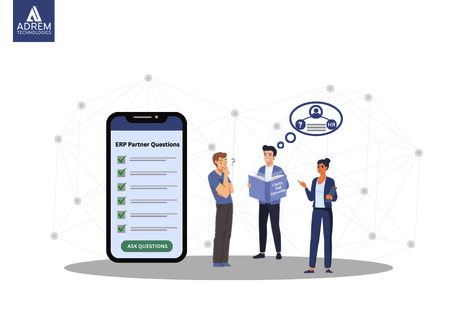
Introduction: ERP Projects Rarely Fail Because of Software
ERP decisions rarely fail because of software alone.
They fail because the wrong partner is trusted at the wrong time.
ERP systems affect finance, operations, HR, and reporting all at once. Once implementation begins, reversing direction becomes expensive and disruptive. I once sat in a project meeting where everyone nodded politely, yet no one could clearly explain ownership. That project struggled for years.
The real issue usually starts with assumptions.
Leaders assume all ERP partners work the same way. They assume certifications equal competence. They assume experience transfers easily between industries.
Sometimes that is true. Often, it is not.
This is where partners like Adrem Technologies stand out. Their approach focuses on aligning ERP systems with real business processes, rather than forcing businesses to adjust around software. That difference becomes clear once the project moves from slides into daily operations.
The goal of these 10 questions is clarity. Not certainty, but clarity. Asking the right questions early builds informed confidence instead of blind optimism.
Why Choosing the Right ERP Partner Is Harder Than It Looks
On the surface, ERP partners sound similar.
Everyone promises:
-
Experience
-
Methodology
-
Support
However, approaches vary significantly.
Some partners prioritise speed. Others focus on control. Some expect strong client involvement. Others quietly take over decisions.
None of these approaches are wrong by default. Problems arise when expectations do not match reality. Asking direct questions exposes how a partner actually works under pressure.
10 Questions to Ask Before Hiring an ERP Implementation Partner
1. How will you adapt the ERP to our existing business processes?
A strong partner explains how they analyse workflows first. They identify real inefficiencies and configure the ERP to support existing ways of working.
This approach reduces resistance and speeds up adoption.
2. What experience do you have in our industry?
The right partner shares specific examples. They explain common industry challenges and how previous lessons influence your project.
This avoids repeated mistakes and reduces rework.
3. How do you ensure data migration accuracy before go-live?
A reliable answer includes:
-
Data audits
-
Cleansing plans
-
Multiple test migrations
-
Validation by business users
This prevents launching with inaccurate data.
4. What security controls are built in from the start?
A capable partner discusses:
-
Role-based access
-
Audit logs
-
Segregation of duties
-
Secure integrations
Security should be designed during implementation, not added later.
5. How do you manage change and user adoption?
Strong partners treat adoption as a human challenge.
They combine role-based training, clear communication, and hands-on support. Users are guided, not pressured.
6. How do you manage scope changes without damaging budgets?
A mature partner explains how they:
-
Document changes
-
Assess impact early
-
Discuss trade-offs transparently
This prevents surprises and protects trust.
7. Who will manage the project day to day?
A reassuring answer clearly identifies:
-
The delivery team
-
Their experience
-
Continued access to senior experts
This avoids the common problem of sales teams disappearing after contracts are signed.
8. How do you test the ERP under real conditions?
Strong partners describe scenario-based testing using:
-
Real data
-
Real users
-
Real workloads
This reveals issues before go-live.
9. What does post go-live support include?
The right answer covers:
-
Hypercare periods
-
Escalation paths
-
Response timelines
-
Knowledge transfer
Support matters most when daily pressure begins.
10. Can you share examples of ERP challenges you resolved?
Experienced partners speak openly about difficulties.
They explain what went wrong, how it was fixed, and what they learned. Honesty here signals capability, not weakness.
Long-Term Impact of Asking the Right Questions
| Area | Without Key Questions | With Key Questions |
|---|---|---|
| Timeline | Unpredictable | Manageable |
| Budget control | Frequent overruns | Fewer surprises |
| User adoption | Low | Higher |
| Relationship quality | Tense | Collaborative |
Midway Reality Check
At this point, many organisations realise something uncomfortable.
They have focused more on software features than partner behaviour.
That is why asking these 10 questions matters. ERP success depends less on what the system can do and more on how the partner responds when challenges appear.
Real-World Scenario
A distribution company once chose an ERP partner based purely on price.
Six months later, the system technically worked. However, warehouse staff avoided it. Spreadsheets returned. Trust faded.
Compare that with companies working alongside partners like Adrem Technologies. Their approach starts with understanding operations before configuration begins. As a result, users see their work reflected in the system.
Adoption improves. Friction decreases.
Superficial Evaluation vs Informed Evaluation
| Evaluation Area | Superficial Approach | Informed Approach |
|---|---|---|
| Partner selection | Cost-based | Fit-based |
| Methodology | Assumed | Clearly explained |
| Team expertise | Sales-led | Delivery-led |
| Risk handling | Ignored | Discussed openly |
Why the Partner’s Mindset Matters
ERP implementation is a shared journey.
A partner who listens early often listens later. A partner who dismisses concerns early may repeat that behaviour when issues escalate.
The approach used by Adrem Technologies reflects a mindset of transparency, preparation, and collaboration. Challenges still arise, but they are easier to manage when trust exists.
Final Thoughts
Choosing an ERP partner is not a procurement task. It is a leadership decision with long-term consequences.
Asking the right questions helps organisations move beyond surface comfort into real understanding.
Companies like Adrem Technologies show how thoughtful ERP partnerships work in practice. Their focus on aligning technology with business reality builds confidence throughout the project lifecycle.
In the end, the right questions protect more than timelines and budgets. They protect morale, credibility, and momentum.
What is an ERP implementation partner? An ERP implementation partner is a specialist firm that helps organisations plan, configure, deploy, and support ERP systems.
Why is choosing the right ERP partner so important? ERP systems affect multiple departments. A poor partnership can lead to low adoption, budget overruns, and operational disruption.
Are ERP certifications enough to evaluate a partner? No. Certifications are important, but real-world experience, methodology, and communication matter just as much.
When should these questions be asked? These questions should be asked before contracts are signed, during partner evaluations and early discussions.
Should cost be the main decision factor? No. The lowest-cost partner often leads to higher long-term costs through rework, delays, and poor adoption.
How does Adrem Technologies approach ERP implementations? They focus on understanding real workflows first, aligning ERP systems to business needs, and supporting adoption throughout the lifecycle.
Frequently asked questions
What is an ERP implementation partner?
An ERP implementation partner is a specialist firm that helps organisations plan, configure, deploy, and support ERP systems.
Why is choosing the right ERP partner so important?
ERP systems affect multiple departments. A poor partnership can lead to low adoption, budget overruns, and operational disruption.
Are ERP certifications enough to evaluate a partner?
No. Certifications are important, but real-world experience, methodology, and communication matter just as much.
When should these questions be asked?
These questions should be asked before contracts are signed, during partner evaluations and early discussions.
Should cost be the main decision factor?
No. The lowest-cost partner often leads to higher long-term costs through rework, delays, and poor adoption.
How does Adrem Technologies approach ERP implementations?
They focus on understanding real workflows first, aligning ERP systems to business needs, and supporting adoption throughout the lifecycle.
Tags
Author

Sara Adam