
Integrating Microsoft Dynamics 365 with UAE Government Platforms: Practical Opportunities & Real Business Benefits
Why Integration Is No Longer Optional in the UAE
Running a business in the UAE today feels fast. Regulations evolve quickly. Deadlines appear sooner than expected. Meanwhile, government platforms require strict formatting, structured submissions, and absolute accuracy.
If your ERP system is not aligned with those platforms, pressure builds immediately.
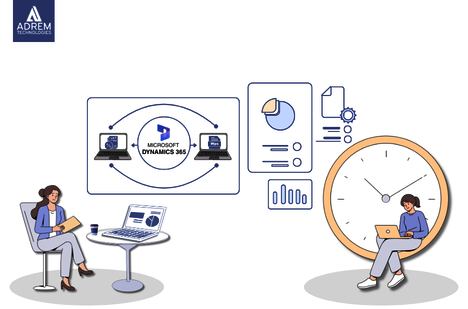
That is why integrating Microsoft Dynamics 365 with UAE government systems has become a serious boardroom discussion across Dubai, Abu Dhabi, and Sharjah. This shift is not about digital transformation for presentation slides. Instead, it is about eliminating friction between internal operations and external regulatory requirements.
Many finance and HR teams still export VAT reports to Excel, manually prepare WPS payroll files, or adjust e-invoices separately before submission. It works. However, it remains fragile. Fragile systems create stress.
Organizations such as Adrem Technologies help businesses redesign this structure. Rather than relying on workarounds, they build practical integrations that allow Microsoft Dynamics 365 to connect directly with UAE regulatory platforms.
So the real question becomes: Are your employees still bridging disconnected systems manually, or are your systems finally communicating automatically?
Key UAE Government Platforms Commonly Integrated
| Government Platform | Business Area | Integration Outcome |
|---|---|---|
| Federal Tax Authority | VAT Reporting | Automated tax calculation & structured submission |
| Ministry of Human Resources (MOHRE) | WPS Payroll | Compliant payroll file generation |
| Dubai Trade Portal | Customs & Logistics | Shipment declaration synchronization |
| UAE E-Invoicing Framework | Billing | Structured invoice validation |
Why the UAE Digital Environment Demands ERP Integration
The UAE has invested heavily in digital governance. Platforms are structured, monitored, and enforced.
Businesses must comply with:
-
Strict VAT reporting under the Federal Tax Authority
-
Monthly WPS payroll submission standards
-
Customs declaration processes
-
Emerging mandatory e-invoicing systems
Unlike slower regulatory environments, updates in the UAE move quickly. A clarification from the Federal Tax Authority can immediately affect how transactions must be reported.
Without integration, internal teams become the manual data bridge. While experienced professionals work carefully, human processes naturally introduce risk.
Integration significantly reduces that risk by aligning ERP data with government requirements automatically.
What Integration Looks Like in Daily Operations
When implemented correctly, integration delivers:
-
Secure API connections
-
Automated VAT reporting structures
-
Built-in WPS file formatting
-
Real-time compliance dashboards
-
Encrypted data transmission
Consider VAT submissions. Instead of manually preparing spreadsheets and reconciling numbers repeatedly, Microsoft Dynamics 365 generates structured reports ready for filing. Errors surface early. Adjustments occur before deadlines.
Similarly, payroll processing becomes predictable when WPS files generate automatically in MOHRE-compliant format.
One Dubai-based trading firm once described VAT week as “controlled chaos.” After integration, the CFO stated, “We finally sleep properly during VAT week.” That calm reflects operational maturity.
Business Benefits Beyond Compliance
Integration creates practical advantages:
-
Reduced risk of penalties
-
Faster month-end closing
-
Improved audit preparation
-
Real-time compliance dashboards
-
Stronger investor confidence
When executives can view compliance status instantly, discussions shift from uncertainty to informed planning.
Moreover, scalability improves. Expansion into additional emirates becomes simpler because reporting frameworks remain consistent.
Operational Shift: Before vs. After Integration
| Area | Before Integration | After Integration |
|---|---|---|
| VAT Filing | Manual spreadsheets | ERP-generated reports |
| Payroll WPS | Separate formatting | Automated compliant files |
| Compliance Tracking | Email reminders | Dashboard alerts |
| Audit Preparation | Reactive search | Centralized digital archive |
The difference may appear subtle daily. However, over time, efficiency improves dramatically.
Real-World Example: Construction Firm in Abu Dhabi
A mid-sized construction firm maintained separate ERP data internally while submitting VAT and payroll reports manually via government portals.
During one quarter, a minor calculation mismatch resulted in a penalty. Although manageable, the incident triggered board-level concern.
After integrating Microsoft Dynamics 365 with government platforms:
-
VAT reports generated automatically
-
WPS payroll files aligned correctly each month
-
Deadlines appeared on compliance dashboards
Within six months, reporting time decreased and administrative stress dropped noticeably. Project managers focused on execution instead of corrective paperwork.
This pattern repeats across industries once integration stabilizes.
Security and Governance Must Be Prioritized
Integration requires strong security architecture.
Key safeguards include:
-
Encrypted API authentication
-
Role-based access control
-
Secure transmission protocols
-
Alignment with UAE cybersecurity standards
Financial and payroll data remain sensitive. Therefore, integration frameworks must be designed from the beginning with compliance and data protection in mind.
Experienced regional partners ensure this balance remains intact.
Strategic Impact Across Departments
| Department | Measurable Impact |
|---|---|
| Finance | Faster closing cycles & accurate VAT |
| HR | Reliable WPS submission |
| Operations | Reduced manual coordination |
| Executive Leadership | Clear regulatory visibility |
Integration is not only a technical upgrade. It becomes an organizational stabilizer.
Why Integration Matters Now
Digital transformation in the UAE is accelerating. Government digitization is not slowing down.
By integrating Microsoft Dynamics 365 with regulatory platforms:
-
Compliance becomes routine
-
Risk exposure decreases
-
Operational stress declines
-
Growth initiatives gain attention
Companies that automate compliance free valuable resources. Meanwhile, those dependent on spreadsheets remain reactive.
Challenges to Expect
Integration projects require thoughtful execution.
Organizations may face:
-
Complex data mapping
-
Interpretation of regulatory requirements
-
Change management resistance
-
Initial investment costs
Nevertheless, long-term gains typically outweigh short-term disruption.
A Practical Roadmap for Integration
-
Conduct a compliance and systems audit
-
Identify high-risk reporting areas (VAT or payroll)
-
Begin phased integration
-
Partner with certified regional experts
-
Train internal teams thoroughly
A phased strategy minimizes risk and maximizes adoption.
Adrem Technologies demonstrates how structured implementation avoids unnecessary disruption and focuses on measurable results instead.
Final Thoughts
The UAE continues advancing digital governance rapidly. Businesses that delay integration risk falling behind operationally and competitively.
Integrating Microsoft Dynamics 365 with UAE Government Platforms is not merely a system upgrade. It represents a structural improvement in compliance, governance, and operational reliability.
Perhaps the most unexpected benefit is cultural. Teams stop reacting to deadlines and begin planning proactively. Leadership gains clarity. Stress reduces across departments.
In a regulatory environment that evolves quickly, that clarity is not optional. It is strategic.
The more relevant question is no longer whether integration is necessary. It is how long an organization can afford to operate without it.
**Frequently Asked Questions **
Why should businesses in the UAE integrate Microsoft Dynamics 365 with government platforms? Integration ensures accurate VAT reporting, compliant WPS payroll submission, structured e-invoicing, and smoother customs processing. As a result, businesses reduce manual errors, avoid penalties, and improve operational efficiency.
Which UAE government systems can integrate with Microsoft Dynamics 365? Common integrations include the Federal Tax Authority (VAT), Ministry of Human Resources & Emiratisation (WPS payroll), Dubai Trade Portal (customs), and the UAE e-Invoicing framework.
Is integration secure and compliant with UAE regulations? Yes. When properly configured, integration uses encrypted API connections, role-based access controls, and secure data transmission protocols that align with UAE cybersecurity and compliance standards.
How does Adrem Technologies support Microsoft Dynamics 365 integration projects? Adrem Technologies provides end-to-end support, including system audits, data mapping, secure API setup, phased integration planning, and team training to ensure Microsoft Dynamics 365 aligns seamlessly with UAE government platforms.
Frequently asked questions
Why should businesses in the UAE integrate Microsoft Dynamics 365 with government platforms?
Integration ensures accurate VAT reporting, compliant WPS payroll submission, structured e-invoicing, and smoother customs processing. As a result, businesses reduce manual errors, avoid penalties, and improve operational efficiency.
Which UAE government systems can integrate with Microsoft Dynamics 365?
Common integrations include the Federal Tax Authority (VAT), Ministry of Human Resources & Emiratisation (WPS payroll), Dubai Trade Portal (customs), and the UAE e-Invoicing framework.
Is integration secure and compliant with UAE regulations?
Yes. When properly configured, integration uses encrypted API connections, role-based access controls, and secure data transmission protocols that align with UAE cybersecurity and compliance standards.
How does Adrem Technologies support Microsoft Dynamics 365 integration projects?
Adrem Technologies provides end-to-end support, including system audits, data mapping, secure API setup, phased integration planning, and team training to ensure Microsoft Dynamics 365 aligns seamlessly with UAE government platforms.
Tags
Author

Sara Adam