
How Microsoft Dynamics 365 Retail Is Powering the Next Wave of UAE Retail Growth
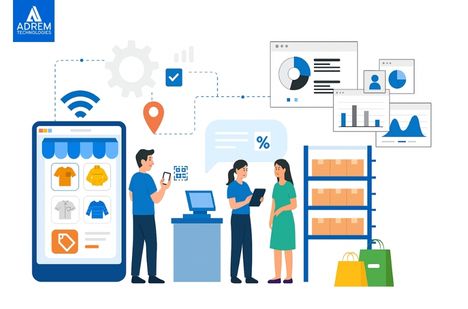
Walk through Dubai Mall on a busy Friday and you’ll feel it instantly. Retail in the UAE is fast, digital, and constantly evolving. Customers move seamlessly between mobile apps, physical stores, social platforms, and delivery services and they expect everything to work flawlessly.
We’ve seen it firsthand. While shoppers enjoy this “beautiful chaos,” many retailers behind the scenes are struggling with disconnected systems, mismatched inventory data, and unclear insights.
That’s where Microsoft Dynamics 365 Retail (now Dynamics 365 Commerce) changes the game. It connects stores, e-commerce, POS, inventory, and customer data into one intelligent, cloud-based retail platform built to support the unique demands of the UAE market.
Dynamics 365 Retail UAE at a Glance
| Retail Area | How Dynamics 365 Helps |
|---|---|
| Omnichannel Retail | Unified online and in-store experiences |
| POS & Store Operations | Real-time sales and stock visibility |
| Inventory Management | Accurate availability across all locations |
| Customer Insights | Personalized, data-driven engagement |
| VAT & Compliance | Built-in UAE VAT support |
| Cloud Retail ERP | Scalable, secure Microsoft Azure platform |
What Dynamics 365 Retail Actually Does (Beyond the Buzzwords)
We like to think of Dynamics 365 Retail as a retail control room.
Instead of juggling multiple tools, retailers manage everything in one system:
-
Point of Sale (POS)
-
E-commerce and mobile commerce
-
Inventory and warehouse management
-
Promotions, pricing, and loyalty
-
Customer history and preferences
Imagine this scenario: A customer checks a product online, walks into your Abu Dhabi store, and the associate already knows who they are, what they browsed, and whether the item is available in-store or in the Dubai warehouse. That’s not guesswork it’s real-time retail data working together.
Trying to replicate this with disconnected tools usually costs more in complexity than it saves.
Why UAE Retailers Are Switching to Dynamics 365 Retail
1. Customers Expect Omnichannel Everything
In the UAE, there’s no clear boundary between online and offline retail. Customers expect:
-
Same-day delivery
-
Click-and-collect
-
Endless aisle fulfillment
Dynamics 365 Retail enables true omnichannel retail, so stock and orders flow smoothly across channels.
2. One Version of the Truth
Retailers tell us their biggest pain point is unclear data. Dynamics 365 replaces spreadsheets with real-time dashboards showing what’s selling, where, and why.
3. Promotions Without the Chaos
Running promotions across stores, e-commerce, and loyalty apps is notoriously difficult. With Dynamics 365, promotions are configured once and applied consistently everywhere.
4. Smarter Decisions Through Retail Analytics
We worked with a Dubai retailer who discovered through Dynamics 365 analytics that most younger customers were buying only on mobile. Adjusting their strategy delivered measurable results within weeks.
Sometimes growth doesn’t come from more marketing but from better insight.
UAE-Specific Retail Requirements (And Why They Matter)
Retail in the UAE isn’t one-size-fits-all. Businesses deal with:
-
VAT compliance
-
Multi-currency transactions
-
Arabic and English interfaces
-
Tourists, residents, and regional shoppers
Dynamics 365 Retail supports these requirements natively, but local implementation expertise is key.
At Adrem Technologies, we tailor the platform to fit local retail operations, peak seasons, and customer behavior rather than forcing generic templates.
How to Start a Successful Retail Transformation
Retail transformation doesn’t need to be risky or overwhelming. We recommend a phased approach:
Step 1: Define What “Success” Means
Faster checkout? Fewer stockouts? Higher loyalty adoption? Clear goals guide the design.
Step 2: Review Your Existing Systems
POS, accounting, e-commerce, warehouses identify where data breaks down.
Step 3: Start Small
Launch with one store, region, or channel. Refine, then scale confidently.
Step 4: Train Your Teams
Retail staff adopt systems faster when they see how it saves time and reduces errors.
Step 5: Optimize Continuously
Retail never stands still. Your system shouldn’t either.
Common Retail Challenges (And How to Avoid Them)
Messy Data Clean product, pricing, and inventory data before migration.
Outdated Hardware Some legacy POS devices may need upgrading.
Change Resistance Involve store teams early and celebrate quick wins.
Compliance Risks VAT and data privacy must be handled correctly from day one.
The Future of Retail in the UAE
Retail in the UAE is moving toward:
-
AI-driven demand forecasting
-
Personalized customer journeys
-
Sustainability and traceability reporting
Microsoft Copilot in Dynamics 365 already analyzes trends and highlights potential stock risks giving retailers time to act, not react.
This isn’t about replacing people. It’s about empowering them with better information.
A Real Retail Story from Dubai
One local apparel brand came to us frustrated. Their systems didn’t align, promotions were inconsistent, and customer trust was slipping.
After implementing Dynamics 365 Retail:
-
Inventory synced instantly across stores and online
-
Order fulfillment accelerated
-
Store managers gained real-time visibility
Their biggest takeaway? “For the first time, we trust our numbers.”
Final Thoughts
Retail in the UAE is no longer just about selling products. It’s about connecting data, people, and experiences across every channel.
Microsoft Dynamics 365 Retail implemented with local expertise makes that possible.
If you’re tired of disconnected systems and unclear insights, it may be time to experience what connected retail really feels like.
If you’re exploring Dynamics 365 Retail UAE or planning an omnichannel transformation, Adrem Technologies can help design, implement, and optimize a solution tailored to your retail business.
👉 Reach out to discover how connected retail can drive growth and clarity.
Is Dynamics 365 Retail suitable for small and large UAE retailers? Yes. It scales from boutiques to large retail chains.
Does it support omnichannel retail? Absolutely. Online, in-store, mobile, and fulfillment are fully integrated.
Is UAE VAT supported? Yes. VAT configuration and reporting are built in.
Is Dynamics 365 Retail cloud-based? Yes. It runs securely on Microsoft Azure.
Frequently asked questions
Is Dynamics 365 Retail suitable for small and large UAE retailers?
Yes. It scales from boutiques to large retail chains.
Does it support omnichannel retail?
Absolutely. Online, in-store, mobile, and fulfillment are fully integrated.
Is UAE VAT supported?
Yes. VAT configuration and reporting are built in.
Is Dynamics 365 Retail cloud-based?
Yes. It runs securely on Microsoft Azure.
Tags
Author

Sara Adam