
Unified Business Platforms UAE: Why They Matter More Than Ever
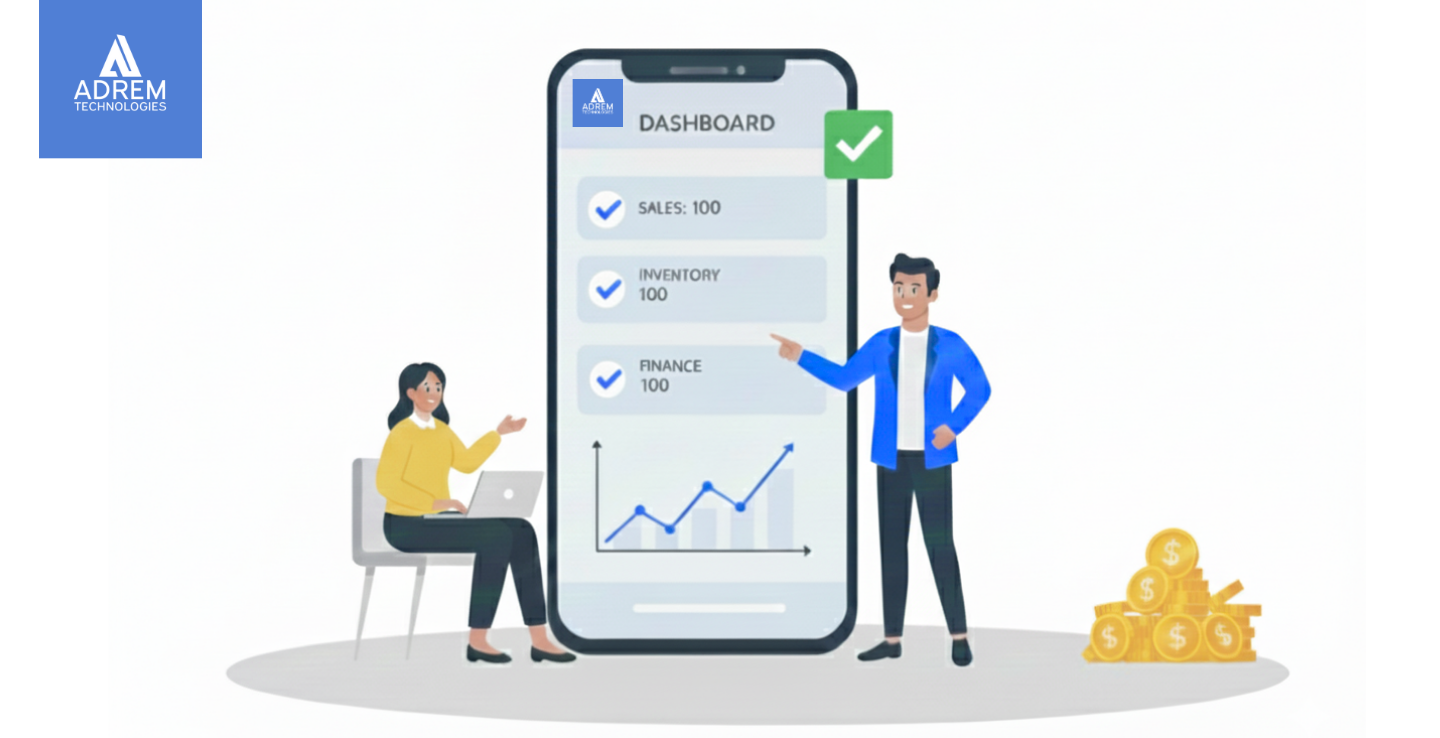
“When systems connect, decisions become faster, clearer, and more confident.”
📊 Quick Overview: Unified Platforms in UAE Businesses
| Business Challenge | Unified Platform Solution | Business Impact |
|---|---|---|
| Disconnected systems | Centralized data platform | One source of truth |
| Slow reporting | Real-time dashboards | Faster decisions |
| Data inconsistency | Automated synchronization | Higher accuracy |
| Compliance risks | Built-in validation | Reduced penalties |
| Growth limitations | Scalable systems | Smooth expansion |
🚀 Introduction: Why UAE Businesses Need Unified Systems
Running a business in the UAE often feels like managing multiple moving parts at once. Finance, sales, operations, and compliance all demand attention simultaneously.
However, many organizations still rely on disconnected tools. Over time, these systems create confusion instead of clarity.
For example:
-
Sales reports show one number
-
Inventory shows another
-
Finance shows something different
As a result, teams spend hours verifying data instead of acting on it.
This is where unified business platforms UAE become essential. Instead of working in silos, businesses operate from a single connected system.
🔗 What a Unified Business Platform Looks Like
A unified platform connects all core business functions into one ecosystem.
This includes:
-
Finance
-
Sales
-
Procurement
-
Inventory
-
HR
-
Reporting
What Happens in Practice?
When a customer order is placed:
-
Inventory updates instantly
-
Finance records the transaction
-
Managers see real-time dashboards
Therefore, there is no delay, no confusion, and no duplication.
⏳ Why Businesses Lose Time Without Realizing It
Most companies assume time is lost in meetings or emails.
However, the real issue is hesitation.
People pause because they don’t trust the data in front of them.
For instance, one Dubai-based company relied heavily on messaging apps just to confirm internal numbers. While it seemed normal, it created hidden inefficiencies.
On the other hand, unified systems remove this uncertainty. Data becomes reliable, and decisions happen faster.
⚠️ Reducing Errors Before They Become Costly
Errors rarely appear suddenly. Instead, they build quietly.
Common examples include:
-
Incorrect VAT entries
-
Outdated customer data
-
Misaligned financial figures
In the UAE, compliance is strict. Therefore, even small errors can lead to penalties.
With unified platforms:
-
Data is entered once
-
Validation rules detect inconsistencies
-
Approval workflows ensure accuracy
As a result, businesses reduce risk significantly.
📈 Supporting Faster and Smarter Growth
Growth often exposes system weaknesses.
For example:
-
Adding new branches increases complexity
-
Expanding teams creates data inconsistencies
-
Entering new markets introduces compliance challenges
However, unified systems scale smoothly.
Key Advantages:
-
Standardized processes across locations
-
Real-time visibility for leadership
-
Consistent operations across branches
Therefore, growth becomes controlled rather than chaotic.
🇦🇪 Real UAE Business Example
A trading company operating between Dubai and Sharjah faced major challenges:
-
Conflicting reports
-
Manual inventory tracking
-
Slow financial closing
After implementing a unified platform with Adrem Technologies:
-
Reporting time dropped from weeks to days
-
Inventory updated in real time
-
VAT compliance improved
-
Decision-making became faster
As a result, leadership focused on growth instead of troubleshooting.
⚙️ Manual vs Automated Systems Comparison
Manual vs Automated Processes
| Aspect | Manual Approach | Unified Platform |
|---|---|---|
| Speed | Slow and inconsistent | Fast and real-time |
| Accuracy | Error-prone | System-driven validation |
| Scalability | Difficult to manage | Easily scalable |
| Reporting | Delayed | Instant dashboards |
| Audit Trail | Manual tracking | Automated records |
🧠 The Human Impact (Often Overlooked)
Technology is not just about systems it’s about people.
When systems work:
-
Stress decreases
-
Confidence increases
-
Teams trust their data
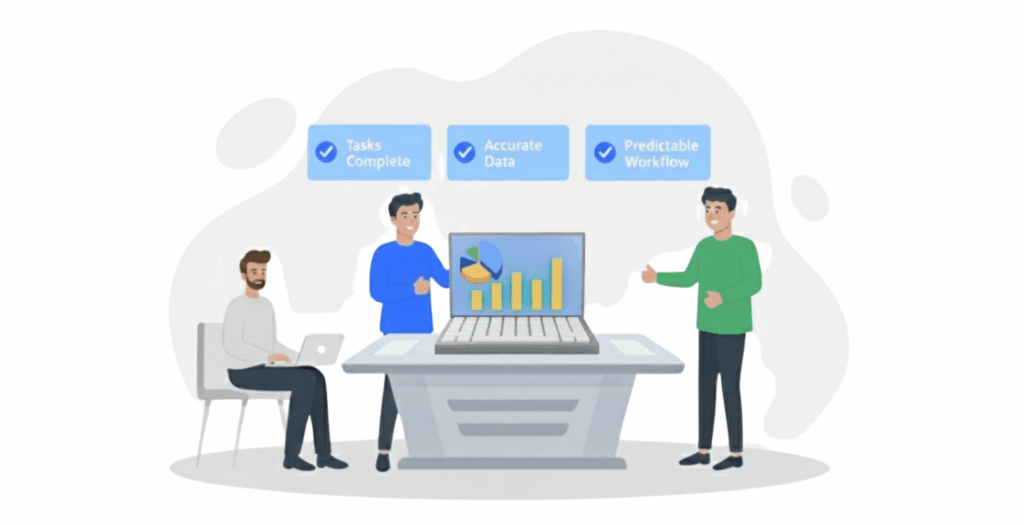
One HR manager shared that after implementing a unified system, “work became predictable again.”
That shift is powerful.
🌍 Why UAE Businesses Benefit Even More
The UAE business environment is uniquely complex.
Companies deal with:
-
Multiple currencies
-
Bilingual operations (Arabic & English)
-
Rapid regulatory changes
-
Cross-border operations
Therefore, unified platforms are even more valuable here.
📊 Key Advantages for UAE Businesses
Benefits of Unified Platforms
| Advantage | Why It Matters |
|---|---|
| Real-time visibility | Enables faster decisions |
| VAT & compliance support | Reduces regulatory risks |
| Multi-currency handling | Supports global trade |
| Multilingual systems | Fits UAE workforce |
| Scalable structure | Supports expansion |
⚠️ Challenges Without Unified Platforms
Without a connected system, businesses often face:
-
Data mismatches
-
Reporting delays
-
Communication gaps
-
Compliance risks
-
Operational inefficiencies
Over time, these issues limit growth.
🤝 Why Choose Adrem Technologies
At Adrem Technologies, we help UAE businesses move from fragmented systems to unified platforms.
Our Approach:
-
Business process analysis
-
System integration
-
Data migration
-
Custom dashboard setup
-
Ongoing support
As a result, your systems work together not against each other.
Frequently Asked Questions
What is a unified business platform? A unified platform connects all business functions like finance, sales, and operations into one system.
Why is it important in the UAE? Because businesses operate across multiple emirates, currencies, and regulations, requiring real-time coordination.
Can it integrate with Dynamics 365? Yes. Platforms like Microsoft Dynamics 365 provide full integration across departments.
Is it suitable for growing businesses? Absolutely. It helps businesses scale without operational confusion.
Why work with Adrem Technologies? They provide UAE-specific expertise, ensuring systems align with local business needs and compliance.
Frequently asked questions
What is a unified business platform?
A unified platform connects all business functions like finance, sales, and operations into one system.
Why is it important in the UAE?
Because businesses operate across multiple emirates, currencies, and regulations, requiring real-time coordination.
Can it integrate with Dynamics 365?
Yes. Platforms like Microsoft Dynamics 365 provide full integration across departments.
Is it suitable for growing businesses?
Absolutely. It helps businesses scale without operational confusion.
Why work with Adrem Technologies?
They provide UAE-specific expertise, ensuring systems align with local business needs and compliance.
Tags
Author

Sara Adam