
Microsoft Dynamics 365 Supply Chain Management UAE: Real Strategies for Faster, Smarter, Connected Operations (2026 Guide)

Supply chain operations in the UAE move at a different pace.
Customer expectations rise continuously. Import-export regulations shift without warning. Seasonal demand spikes can happen overnight. Meanwhile, logistics costs fluctuate, suppliers change, and regional compliance rules continue evolving.
Because of this complexity, businesses across the Emirates increasingly rely on Microsoft Dynamics 365 Supply Chain Management UAE to regain visibility and operational control.
However, the real transformation occurs when companies implement it correctly especially with regional specialists like Adrem Technologies.
Let’s break down how this platform works in real-world UAE environments and why it has become a strategic foundation for 2026.
Why Supply Chain Management Requires a Different Strategy in the UAE
Unlike stable markets, the UAE operates as a high-speed trade hub linking Europe, Asia, and the GCC. Consequently, businesses must manage:
-
Multi-country import/export workflows
-
Rapid seasonal demand shifts
-
Multi-currency purchasing
-
VAT compliance requirements
-
Complex warehouse networks
-
Regional distribution hubs
Therefore, success here requires more than operational tracking. It requires anticipation.
Microsoft Dynamics 365 Supply Chain Management delivers predictive, connected intelligence instead of reactive control.
What Dynamics 365 Supply Chain Management Actually Delivers
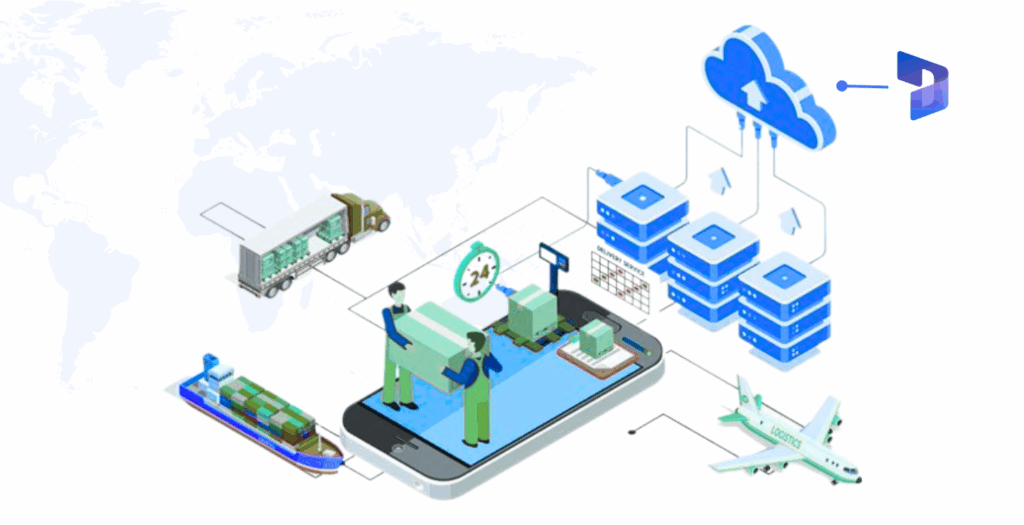
Modern supply chain management is not just about logistics. Instead, it blends data, automation, and forecasting into operational decisions.
Consider this scenario:
-
A warehouse in Jebel Ali updates inventory.
-
A manufacturing site in Abu Dhabi sees availability instantly.
-
Procurement receives AI-driven replenishment suggestions.
-
Finance adjusts cash flow forecasts automatically.
-
Sales teams using Microsoft Dynamics 365 Sales view real-time stock before promising delivery dates.
As a result, communication gaps disappear and over-promising becomes avoidable.
Everything operates within one connected ecosystem.
Core Capabilities That Drive Operational Performance
Enterprise Supply Chain Modules
| Feature | What It Does | Why It Matters in the UAE |
|---|---|---|
| Real-Time Inventory | Live warehouse tracking | Prevents stockouts and overstock |
| Demand Planning | AI-powered forecasting | Handles rapid seasonal shifts |
| Manufacturing Management | Production scheduling & BOM | Supports multi-plant operations |
| Warehouse Automation | Barcode & IoT integration | Speeds pick-pack-ship cycles |
| Procurement Management | Supplier scoring & reordering | Reduces supply delays |
| Transportation Management | Route planning & tracking | Critical for import-export flows |
| CRM Integration | Sync with Dynamics 365 Sales | Prevents unrealistic commitments |
Because all modules share data in real time, visibility extends beyond individual facilities.
2026 Enhancements Strengthening UAE Operations
Microsoft continues expanding capabilities to support high-growth markets like the UAE. Recent enhancements include:
-
AI-driven supply risk detection
-
Predictive replenishment across regions
-
Automated VAT compliance configuration
-
Multi-country logistics dashboards
-
Integrated finance forecasting via Dynamics 365 Finance
-
Advanced transport tracking and route optimization
Consequently, businesses can shift from reactive supply management to proactive operational leadership.
The Power of Integrating Supply Chain & Sales
In fast-moving economies, sales and operations must operate in sync.
If they don’t, common problems occur:
-
Orders promised without stock
-
Forecasting errors
-
Costly emergency procurement
-
Customer dissatisfaction
When Dynamics 365 Supply Chain Management integrates with Dynamics 365 Sales, the impact is immediate.
What Integration Unlocks
| Area | Strategic Benefit |
|---|---|
| Demand Forecasting | Sales pipeline informs production |
| Order Fulfillment | Reps see real stock availability |
| Delivery Commitments | Accurate timelines reduce disputes |
| Cash Flow Planning | Orders update finance automatically |
| Customer Experience | Transparent communication across teams |
Therefore, organizations stop operating in silos and instead function as one coordinated system.
Real UAE Example: From Fragmentation to Control
A distribution company in Sharjah managed five warehouses across different systems. Because inventory data was inconsistent, procurement duplicated orders while sales struggled to confirm delivery timelines.
After implementing Dynamics 365 Supply Chain Management with Adrem Technologies:
-
Order processing improved by 50%
-
Inventory synchronization became real-time
-
Procurement costs decreased
-
Sales and operations alignment improved
-
Delivery commitments gained accuracy
Within weeks, operational clarity replaced confusion.
Why Adrem Technologies Matters in the UAE Market
Technology alone does not guarantee improvement.
Implementation expertise determines long-term success.
Adrem Technologies provides:
-
UAE & GCC compliance configuration
-
Multi-warehouse deployment experience
-
ERP-CRM-Finance integration strategy
-
Process optimization consultation
-
Data migration governance
-
Local business workflow customization
Because the UAE operates differently from many global markets, local expertise significantly reduces operational risk.
Who Should Use Dynamics 365 Supply Chain Management UAE?
This platform is particularly valuable for:
-
Manufacturing companies
-
Logistics & freight operators
-
Retail and FMCG enterprises
-
Distribution businesses
-
Import/export firms
-
Multi-warehouse networks
-
Organizations expanding regionally
-
Businesses already using Dynamics 365 Sales
If delayed shipments, inconsistent data, or manual spreadsheets slow operations, modernization becomes necessary.
Final Thoughts
Supply chain management in the UAE demands speed, intelligence, and flexibility.
Microsoft Dynamics 365 Supply Chain Management delivers real-time visibility, AI-powered forecasting, automated procurement workflows, and integrated CRM alignment.
However, sustainable results depend on structured implementation.
That is why organizations across the Emirates partner with Adrem Technologies. With the right configuration and regional expertise, the platform becomes more than software it becomes a strategic growth engine.
If your organization seeks stronger operational control, predictive demand planning, and connected inventory visibility, Dynamics 365 Supply Chain Management UAE offers the scalable solution your future requires.
Frequently Asked Questions
What is Microsoft Dynamics 365 Supply Chain Management UAE? It is a cloud-based ERP solution designed to manage warehousing, inventory, manufacturing, procurement, and logistics operations across the UAE and GCC.
Does it integrate with Dynamics 365 Sales? Yes. It connects sales, finance, and supply chain processes to improve forecasting accuracy and customer delivery performance.
Can it handle UAE VAT and regional compliance? Absolutely. The system supports VAT automation and localized compliance configurations.
Is it suitable for multi-warehouse operations? Yes. It provides centralized visibility and real-time synchronization across multiple facilities.
How long does implementation take? Most mid-to-large UAE deployments range from 4–8 months, depending on network complexity. Adrem Technologies uses phased rollouts to reduce disruption.
Frequently asked questions
What is Microsoft Dynamics 365 Supply Chain Management UAE?
It is a cloud-based ERP solution designed to manage warehousing, inventory, manufacturing, procurement, and logistics operations across the UAE and GCC.
Does it integrate with Dynamics 365 Sales?
Yes. It connects sales, finance, and supply chain processes to improve forecasting accuracy and customer delivery performance.
Can it handle UAE VAT and regional compliance?
Absolutely. The system supports VAT automation and localized compliance configurations.
Is it suitable for multi-warehouse operations?
Yes. It provides centralized visibility and real-time synchronization across multiple facilities.
How long does implementation take?
Most mid-to-large UAE deployments range from 4–8 months, depending on network complexity. Adrem Technologies uses phased rollouts to reduce disruption.
Tags
Author

Sara Adam