
Microsoft Dynamics 365 Retail vs Supply Chain: Which Solution Is Best for UAE Businesses?
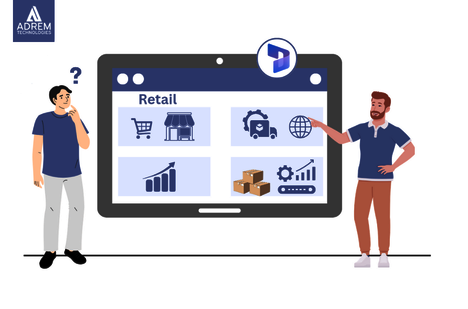
Introduction: Why This Decision Creates Confusion
Interest usually rises when UAE business leaders hear Microsoft Dynamics 365. Confusion often follows just as quickly.
The biggest question is simple but important: Retail or Supply Chain?
Both solutions promise visibility and control. Both are powerful. However, they address very different operational realities.
I once spoke with a retail director who joked that sales were strong, yet the warehouse felt like a mystery novel with missing chapters. Stores performed well. Stock movement did not. That gap is exactly where this decision becomes critical.
Retail teams often assume supply chain tools will fix store-level problems. Operations teams assume retail systems will magically improve coordination. In reality, each solution solves a different type of chaos.
This is why experienced partners like Adrem Technologies matter. Their work focuses on understanding how UAE businesses operate across stores, warehouses, and borders before recommending a Dynamics 365 setup that fits reality instead of theory.
The goal here is clarity. Not hype. Not feature overload. Just a clear explanation of what each solution does best, shaped by UAE-specific factors such as VAT compliance, regional logistics, and fast-growing consumer demand.
Feature Focus: Retail vs Supply Chain
| Area | Dynamics 365 Retail | Dynamics 365 Supply Chain |
|---|---|---|
| Core strength | Customer experience | Operational efficiency |
| Inventory view | Store-centric | End-to-end |
| Promotions | Strong | Limited |
| Planning | Basic | Advanced |
This table alone highlights why choosing the wrong focus creates frustration later.
Understanding Microsoft Dynamics 365 Retail
Dynamics 365 Retail is built around customer-facing operations.
Its core strengths include:
-
Point of sale
-
Promotions and pricing
-
Loyalty programs
-
Store staff workflows
It performs best where customer experience drives revenue. Examples include fashion retailers in Dubai malls, electronics chains running frequent offers, and supermarkets managing daily pricing changes.
Retail teams gain visibility into:
-
Store-level inventory
-
Sales performance
-
Customer behaviour patterns
However, Retail does not deeply optimise supplier lead times, warehouse flows, or cross-border logistics. Its focus stays forward, toward the customer.
Understanding Microsoft Dynamics 365 Supply Chain
Supply Chain Management operates behind the scenes.
It focuses on:
-
Procurement
-
Production planning
-
Inventory control
-
Warehousing
-
Logistics and distribution
This solution matters most when operational complexity creates pressure.
If challenges include delayed shipments, inaccurate stock, rising holding costs, or supplier coordination, supply chain capabilities quickly become essential. While less visible than retail features, their impact on margins is significant.
Best Fit by Business Type
| Business Type | Recommended Focus |
|---|---|
| Retail chains | Dynamics 365 Retail |
| Distributors | Supply Chain |
| Manufacturers | Supply Chain |
| Omnichannel retailers | Combined approach |
This is not a rulebook, but a starting point.
Key Comparison Points for UAE Businesses
Several factors influence the decision in the UAE market.
Primary business focus Retail suits customer-driven organisations with store-heavy models. Supply chain fits businesses managing sourcing and logistics complexity.
Inventory visibility Retail tracks store availability. Supply chain manages stock from supplier to customer.
Growth model Retail supports expansion through new stores and channels. Supply chain supports scale through efficiency and coordination.
VAT and regulatory handling Both support compliance. Supply chain provides deeper cost visibility across borders.
Customer experience vs profitability Retail improves buying experience. Supply chain protects margins.
Midway Reality Check
At this point, many UAE leaders realise something important.
The real decision is not Retail or Supply Chain forever. It is about priority and timing.
Ask one honest question: What hurts more right now lost sales at the shelf or money trapped in stockrooms?
Impact on Omnichannel Operations in the UAE
Most UAE businesses operate across:
-
Physical stores
-
Online channels
-
Regional distribution centres
Retail capabilities support omnichannel selling and promotions. Supply chain functionality ensures accurate fulfilment and fast delivery across Emirates.
When both work together, customer promises match operational reality.
Scalability for Fast-Growing Businesses
Growth in the UAE is rarely predictable.
A company may:
-
Open new stores quickly
-
Launch e-commerce
-
Expand cross-border operations
Retail systems scale well when growth centres on stores and customer experience. Supply chain systems become critical when new suppliers, warehouses, and fulfilment routes appear.
ERP decisions last longer than expected. Planning only for today often creates pain tomorrow.
This is where partners like Adrem Technologies add value. Their work helps organisations map future growth scenarios early, so systems scale smoothly instead of lagging behind expansion.
When a Combined Retail and Supply Chain Approach Makes Sense
For many UAE businesses, this is not an either-or decision.
Retail tools provide insight into sales and customer behaviour. Supply chain tools ensure products arrive on time and in the right quantity. Together, they create connected decision-making.
This combined approach works especially well for:
-
Rapidly growing retailers
-
Omnichannel businesses
-
Companies operating across multiple Emirates
Early investment in balance often prevents painful system changes later.

Common Mistakes UAE Businesses Make
Several patterns appear often.
One mistake is using retail systems to solve supply chain problems. Empty shelves are blamed on visibility, while supplier delays remain unresolved.
Another mistake is expecting supply chain tools to improve in-store experience directly. Promotions, pricing, and POS workflows still need retail-specific capabilities.
The quietest mistake is choosing based on short-term cost instead of long-term fit. In a fast-scaling UAE market, this risk grows quickly.
Real-World Scenarios
A fashion retailer with stores in Dubai and Abu Dhabi sees uneven sell-through. Retail analytics reveal buying patterns and help teams respond faster.
A food distributor supplying hotels struggles with spoilage and urgent reorders. Supply chain tools improve forecasting and expiry management.
Both use Microsoft Dynamics 365. Their needs are entirely different.
Choosing the Right Path with the Right Partner
Technology rarely fails on its own. Misalignment causes failure.
UAE businesses operate where speed, scale, and compliance meet daily. Adrem Technologies supports organisations by aligning real workflows with the right Dynamics 365 modules. Their experience helps avoid over-engineering or underinvestment.
Conclusion: Priorities Define the Answer
Choosing between Retail and Supply Chain is not about features. It is about priorities.
If customer experience is the main challenge, Retail leads. If operational control is under pressure, Supply Chain matters more.
Partners like Adrem Technologies help UAE organisations answer this honestly by analysing workflows, growth plans, and pain points before implementation.
The best ERP decisions often feel quiet at first. Later, they feel powerful.
And in a fast-moving UAE market, that confidence often becomes the real competitive advantage.
**What is the difference between Microsoft Dynamics 365 Retail and Supply Chain? ** Microsoft Dynamics 365 Retail focuses on customer-facing operations such as point of sale, promotions, loyalty programs, and store inventory. Supply Chain focuses on backend operations including procurement, warehousing, logistics, and end-to-end inventory planning.
**Which Dynamics 365 solution is better for UAE businesses? ** There is no single best option for all businesses. UAE companies with store-driven models often benefit more from Retail, while distributors, manufacturers, and logistics-heavy businesses gain more value from Supply Chain. Many growing organisations use both together.
**Can UAE businesses use both Retail and Supply Chain modules together? ** Yes. Many omnichannel businesses in the UAE combine Retail and Supply Chain modules. Retail manages sales and customer experience, while Supply Chain ensures accurate fulfilment and inventory flow across warehouses and Emirates.
**Does Microsoft Dynamics 365 support UAE VAT and compliance requirements? ** Yes. Both Retail and Supply Chain modules support VAT handling and regional compliance. Supply Chain provides deeper cost tracking for cross-border movements, which is valuable for UAE businesses operating across multiple regions.
Frequently asked questions
What is the difference between Microsoft Dynamics 365 Retail and Supply Chain?
Microsoft Dynamics 365 Retail focuses on customer-facing operations such as point of sale, promotions, loyalty programs, and store inventory. Supply Chain focuses on backend operations including procurement, warehousing, logistics, and end-to-end inventory planning.
Which Dynamics 365 solution is better for UAE businesses?
There is no single best option for all businesses. UAE companies with store-driven models often benefit more from Retail, while distributors, manufacturers, and logistics-heavy businesses gain more value from Supply Chain. Many growing organisations use both together.
Can UAE businesses use both Retail and Supply Chain modules together?
Yes. Many omnichannel businesses in the UAE combine Retail and Supply Chain modules. Retail manages sales and customer experience, while Supply Chain ensures accurate fulfilment and inventory flow across warehouses and Emirates.
Does Microsoft Dynamics 365 support UAE VAT and compliance requirements?
Yes. Both Retail and Supply Chain modules support VAT handling and regional compliance. Supply Chain provides deeper cost tracking for cross-border movements, which is valuable for UAE businesses operating across multiple regions.
Tags
Author

Sara Adam