

When Speed Isn’t Enough Anymore
Let’s start with something practical.
When your organisation invests in modern technology, what do you really expect in return? Faster execution? Fewer manual tasks? Initially, that’s where most conversations begin.
However, speed alone rarely solves deeper challenges.
Despite having advanced tools:
- Decisions still take time
- Alignment still feels uneven
- Clarity often remains just out of reach
This is exactly where the shift from productivity tool to strategic asset becomes meaningful.
Many organisations today have solved the access problem. Data is everywhere. Dashboards look polished. Reports are detailed. Yet, translating that information into confident action remains difficult.
So, what’s missing?
Quite simply, information does not automatically create understanding.
Productivity Tool vs Strategic Asset
| Aspect | Productivity Tool | Strategic Asset |
|---|---|---|
| Purpose | Task completion | Decision support |
| Impact | Individual efficiency | Organisational clarity |
| Insight | Limited | Context-rich |
| Role | Supportive | Transformational |
| Outcome | Faster work | Better decisions |
Understanding the Shift from Productivity to Strategy
To begin with, productivity tools are designed to improve speed and efficiency. They help teams complete tasks faster.
On the other hand, strategic assets influence direction. They shape decisions and guide outcomes.
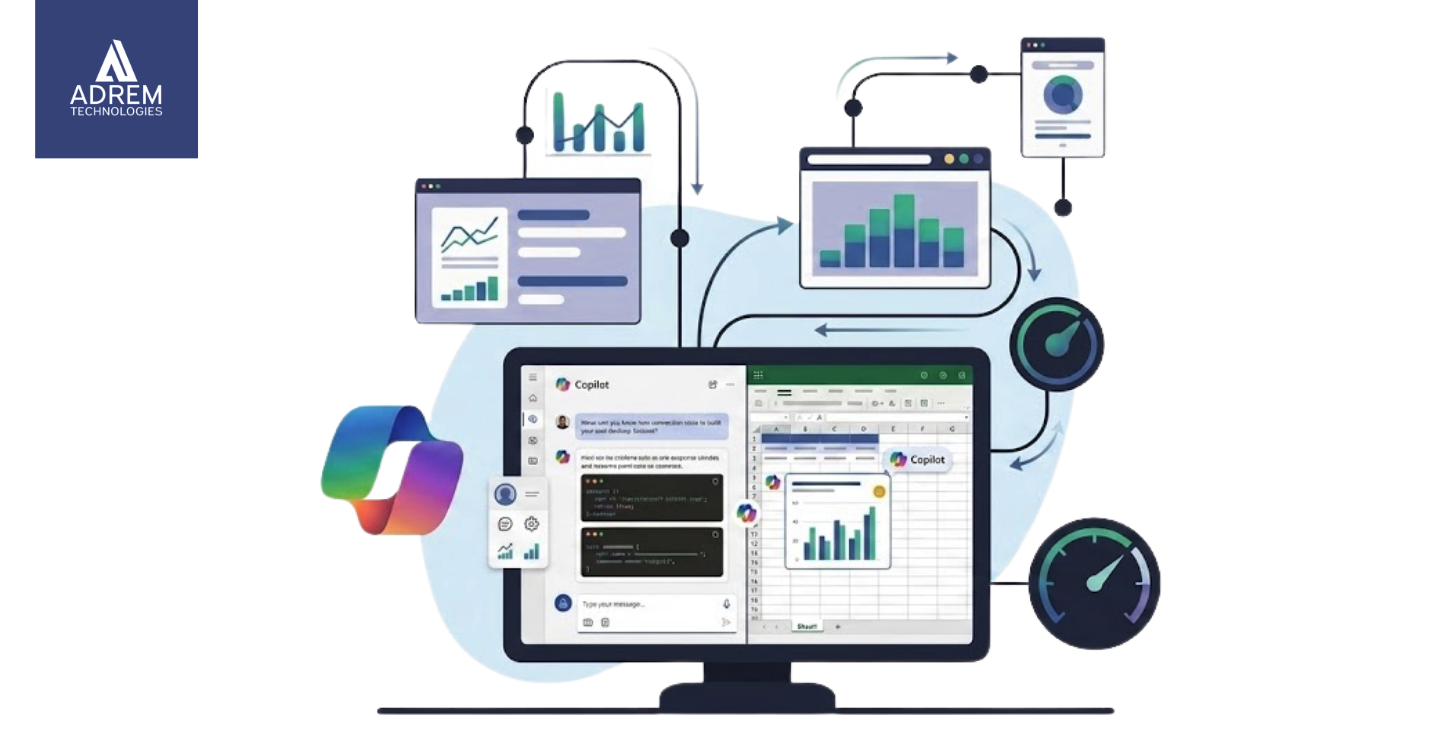
This is where Microsoft 365 Copilot connects both worlds.
Why This Shift Matters
- Teams move from reacting to anticipating
- Leaders transition from reviewing data to understanding it
- Decisions become more grounded and less rushed
As a result, organisations begin to operate with greater clarity rather than just greater speed.
Why Productivity Alone Falls Short
Although efficiency is valuable, it does not guarantee better thinking.
In fact:
- Faster processes can still lead to poor decisions
- Excess data often creates hesitation
- Teams struggle to align on meaning
A Familiar Scenario
You open a report. Everything looks detailed. Still, something feels unclear.
You double-check the numbers. You ask a colleague. Yet, uncertainty remains.
That moment is not about lack of effort.
Instead, it reflects a lack of clarity.
How Microsoft 365 Copilot Creates Strategic Value
This is where things begin to change.
Rather than simply presenting data, Microsoft 365 Copilot helps interpret it.
What It Does Differently
- Connects insights across tools and conversations
- Highlights patterns and trends automatically
- Suggests next steps based on context
Practical Example
Consider a finance team reviewing quarterly results.

Previously, they would:
- Analyse spreadsheets
- Compare reports
- Debate interpretations
Now, with Copilot:
- Key drivers are explained instantly
- Risks and opportunities are highlighted
- Conversations shift directly toward planning
Consequently, meetings become more productive and focused.
Before and After Copilot
| Area | Before Copilot | After Copilot |
|---|---|---|
| Analysis | Time-intensive | Insight-driven |
| Meetings | Data explanation | Decision-focused |
| Speed | Gradual | Accelerated |
| Confidence | Variable | Consistent |
How Decision-Making Culture Evolves
Over time, the impact becomes cultural.
Instead of relying on individual interpretation, teams begin to trust shared insights.
What Changes in Practice
- Meetings start with clarity rather than confusion
- Teams align faster across departments
- Actions follow discussions more naturally
In other words, decision-making becomes smoother and more consistent.
Cultural Transformation
| Element | Traditional Approach | Copilot Approach |
|---|---|---|
| Decision Style | Reactive | Insight-led |
| Communication | Fragmented | Unified |
| Execution | Delayed | Timely |
Challenges to Consider
Of course, the transition is not without challenges.
Some organisations hesitate due to:
- Trust in AI-generated insights
- Data governance concerns
- Learning curves for teams
How to Address Them
- Start with focused use cases
- Provide hands-on training
- Keep human judgment central
This balanced approach ensures technology supports decisions rather than replacing them.
The Role of Implementation Partners
Adopting AI tools effectively requires more than just deployment.
This is where organisations like Adrem Technologies play a key role.
Their approach focuses on:
- Embedding Copilot into real workflows
- Aligning technology with business processes
- Ensuring practical, day-to-day usability
As a result, Copilot becomes part of operations not just an add-on.
Final Thoughts
The real value of Microsoft 365 Copilot does not appear overnight.
Instead, it shows up gradually:
- In clearer conversations
- In more confident decisions
- In reduced uncertainty
Interestingly, teams adapt quickly once they experience this shift.
Tasks that once felt complex become manageable. Decisions that required multiple validations become more straightforward.
These changes may seem subtle. However, their long-term impact is significant.
The Key Takeaway
The journey from productivity tool to strategic asset is not just about efficiency.
It is about thinking differently.
Organisations working with experienced partners like Adrem Technologies are already demonstrating how this shift turns everyday decisions into long-term advantages.
Because ultimately, better outcomes come from better understanding.
Frequently Asked Questions
It is an AI-powered assistant that helps users analyze data, generate insights, and improve productivity across Microsoft applications.
It not only speeds up tasks but also provides context, insights, and recommendations for better decision-making.
Because data alone lacks interpretation. Without context, teams struggle to make confident decisions.
Yes. It adapts to various business functions such as finance, sales, operations, and customer service.
By integrating it into workflows, training teams, and working with experienced partners like Adrem Technologies.
