

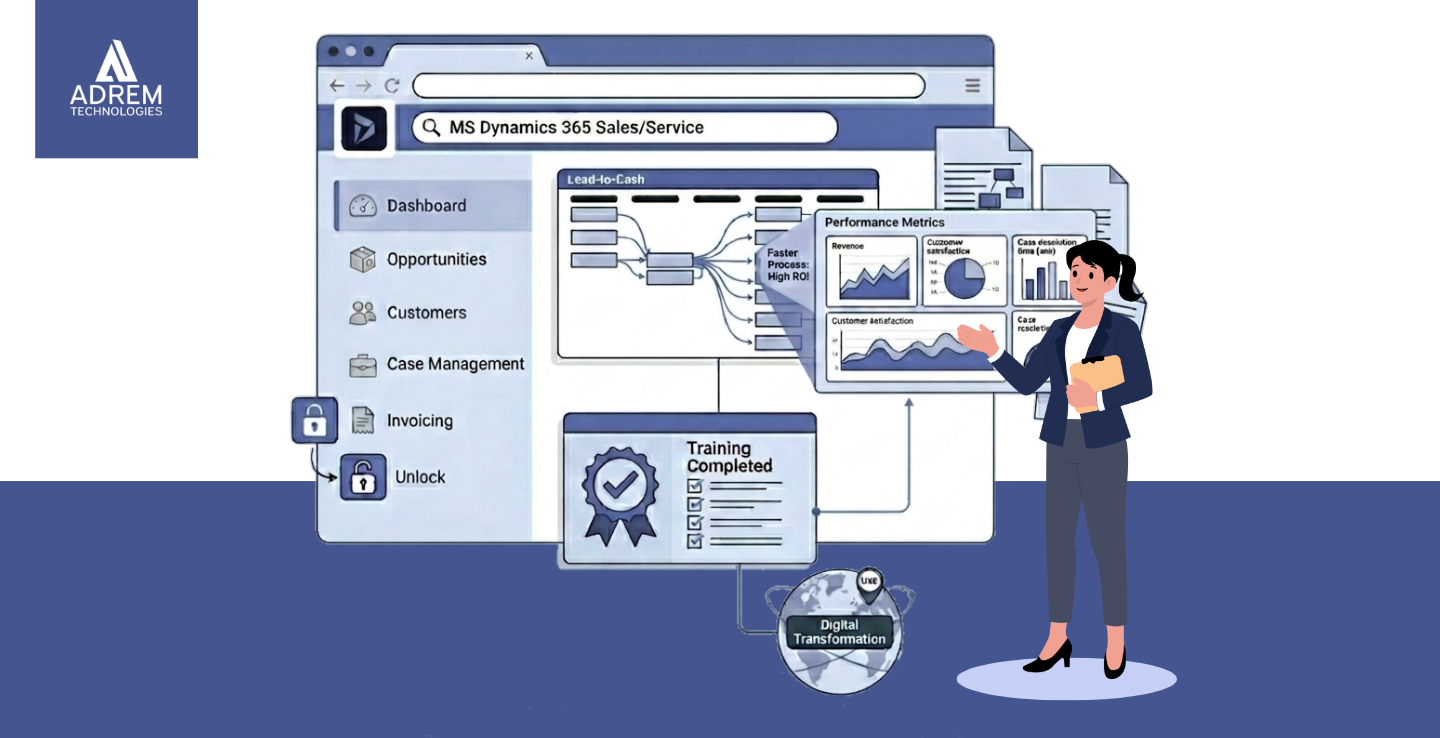
When the System Works, but Progress Feels Slow
After implementing Microsoft Dynamics 365, many organizations expect immediate improvements. Dashboards look clean, workflows appear structured, and leadership anticipates faster operations.
However, reality often unfolds differently.
Even with a fully deployed system, day-to-day efficiency does not always improve right away. In fact, some teams initially experience slower processes. This situation is especially common among companies in the UAE, where digital transformation initiatives move quickly and expectations remain high.
In most cases, the issue is not technical. Instead, it comes down to how people adapt to the system while continuing their daily responsibilities. When learning happens under pressure, hesitation naturally follows.
That hesitation slows progress.
Organizations like Adrem Technologies address this gap by focusing not only on implementation, but also on how users actually learn, apply, and trust the system.
A Comparison Most Teams Recognize
| Area | Without Training | With Proper Training |
|---|---|---|
| System Usage | Careful, inconsistent | Natural, consistent |
| Data Handling | Uncertain, error-prone | Clear and reliable |
| Work Speed | Slower than expected | Noticeably faster |
| Team Confidence | Hesitant | Comfortable |
| ROI | Hard to track | Easier to measure |
What Training ROI Really Looks Like
At first glance, ROI sounds like a financial metric. In practice, it feels much more human.
It appears in everyday moments:
- A finance manager runs reports confidently
- A sales executive updates records without hesitation
- An operations team follows workflows without reverting to spreadsheets
Individually, these changes seem small. Collectively, they transform how the business operates.
Without proper training, teams often use only a fraction of Microsoft Dynamics 365 capabilities. On the other hand, when users feel confident, they begin to explore and rely on the system more fully.
That shift builds trust and trust drives adoption.
Why Digital Transformation Slows Down (Even with the Right System)
Many organizations assume that once a system is live, improvements will follow automatically.
In reality, adoption takes time.
Consider how people react to new tools. Even simple interfaces can feel unfamiliar at first. Now imagine that same adjustment applied to financial data, customer records, and operational workflows.
As a result, certain patterns emerge:
- Teams continue using old processes alongside the new system
- Data gets duplicated across platforms
- Reports take longer due to lack of confidence
Although these behaviors are unintentional, they slow transformation significantly.
The Role of Microsoft Dynamics 365 When Used Effectively
When used properly, Microsoft Dynamics 365 creates a unified business environment.
It enables teams to:
- Access real-time data
- Follow structured workflows
- Make informed decisions
However, these benefits depend entirely on user confidence.
A trained team works efficiently.
An untrained team works cautiously.
That difference defines the pace of transformation.
How Training Changes the Way Teams Work
Training does more than transfer knowledge it reshapes behavior.
Initially, users move slowly. They double-check actions and hesitate before completing tasks. Over time, something changes.
They become familiar.
Once familiarity sets in:
- Tasks are completed faster
- Errors decrease
- Support dependency reduces
Although the change feels gradual, it builds consistent momentum across the organization.
Real Impact: What the Numbers Suggest
Across multiple implementations, similar trends appear:
- System adoption improves by up to 40%
- Data accuracy increases by 30–50%
- Productivity grows by approximately 20%
These improvements are not surprising. When people understand the system, they simply perform better.
Department-Level Transformation
| Department | Before Training | After Training |
|---|---|---|
| Finance | Reports take time | Reporting becomes routine |
| Sales | Tracking feels manual | Processes feel guided |
| Operations | Steps feel disconnected | Workflows feel integrated |
| Customer Care | Responses delayed | Faster, consistent responses |
Why Companies in the UAE Are Rethinking Training
Across the region, organizations are beginning to shift their perspective.
Instead of asking:
“Which system should we implement?”
They now ask:
“How will our teams actually use it?”
This shift is important.
Companies in the UAE are recognizing that technology alone does not create efficiency. Instead, results depend on how well people adopt and apply that technology.
How Adrem Technologies Approaches Training
Rather than focusing on generic system features, Adrem Technologies emphasizes practical learning.

Training is designed around real business tasks:
- Finance teams learn reporting and compliance workflows
- Sales teams focus on pipelines and customer engagement
- Operations teams practice real coordination processes
Because the learning feels relevant, adoption becomes smoother.
What Makes Training Effective
Not all training delivers the same results.
Effective programs usually include:
- Clear explanations without unnecessary complexity
- Hands-on practice sessions
- Open opportunities for questions
- Continuous support after training
Importantly, learning is not a one-time event. It evolves over time.
Common Training Mistakes to Avoid
Even with good intentions, some approaches slow progress:
- Treating training as a single session
- Overloading users with too much information
- Ignoring different learning speeds
Although these shortcuts seem efficient initially, they often create long-term gaps.
Before vs After Training Impact
| Metric | Before Training | After Training |
|---|---|---|
| System Usage | Limited | Widespread |
| Error Frequency | Noticeable | Reduced |
| Team Confidence | Uneven | Consistent |
| Transformation Speed | Gradual | Accelerated |
A Simple but Important Observation
Interestingly, the most successful teams are not always the most technical.
Instead, they:
- Ask questions
- Explore features
- Learn through practice
Training creates that environment.
Not perfect but supportive.
And that support drives progress.
Final Thoughts
Digital transformation rarely fails suddenly. More often, it slows down quietly when teams feel uncertain.
That uncertainty builds over time:
- Processes feel unclear
- Data becomes questionable
- Adoption weakens
However, when training is prioritized, everything changes.
Dynamics 365 Training ROI is not just about numbers. It reflects how confidently teams use the system.
Organizations supported by Adrem Technologies demonstrate this clearly. By aligning technology with user understanding, they help businesses achieve faster and more sustainable transformation.
Ultimately:
- Technology sets the direction
- People determine the speed
Frequently Asked Questions
It refers to the measurable value gained when employees are trained to use the system effectively.
Many organizations notice improvements within a few weeks, especially in productivity and accuracy.
Yes. Without proper training, teams struggle to use systems efficiently.
Absolutely. Smaller teams often see faster improvements because each role has a larger impact.
They provide practical, role-based training along with ongoing support tailored to real business scenarios.
